
(This is a guest post by Nick Woodall who is a partner at the Family Separation Clinic and a Psychodynamic Psychotherapist).
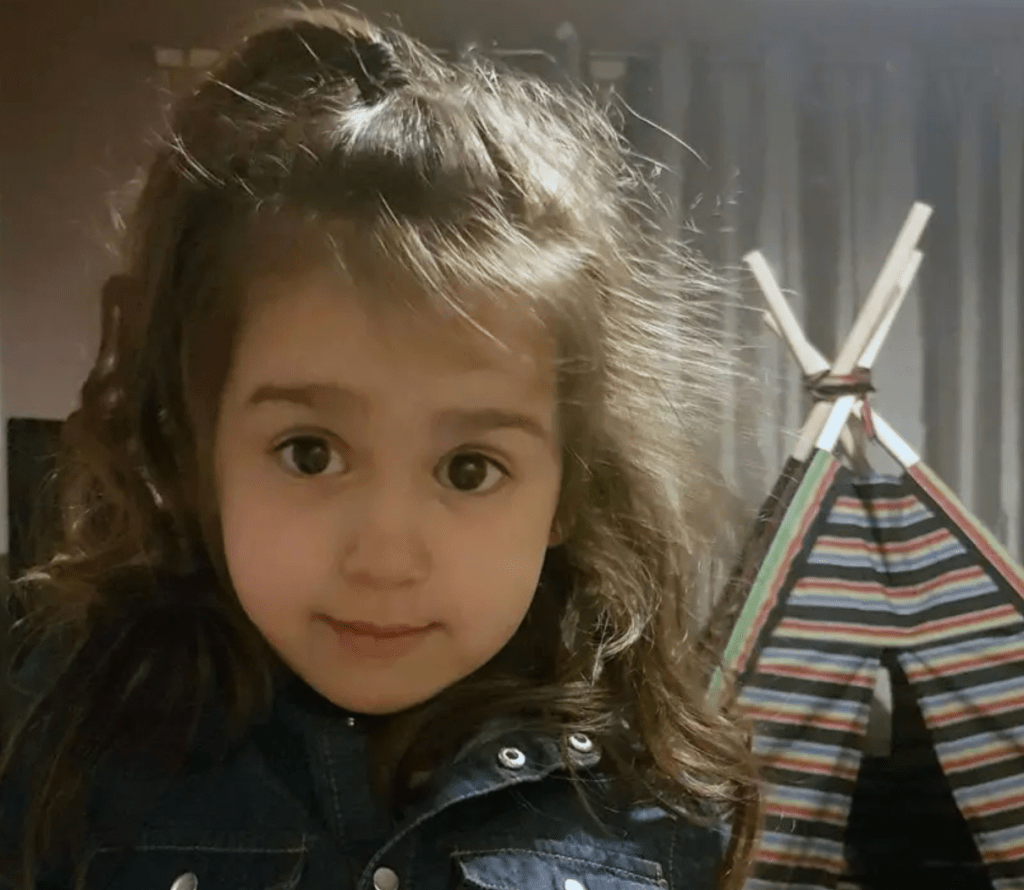
Sara Sharif’s body was found in her home in Woking in August 2023. She was just 10 years old. Investigations revealed Sara suffered severe abuse, with over 70 injuries, signs of strangulation, and starvation. Her injuries spanned weeks, reflecting prolonged harm. Her father, Urfan Sharif, stepmother, Beinash Batool, and uncle, Faisal Malik, initially fled to Pakistan after her death but were later extradited to the UK. On 11 December 2024, Urfan Sharif and Beinash Batool were found guilty of murdering Sara. Faisal Malik was found not guilty of murder but was found guilty of causing or allowing the death of a child. Today, all three were sentenced for their part in her death.
As we try to absorb and come to terms with the appalling and sustained abuse that Sara Sharif suffered at the hands of her father, stepmother, and uncle, significant questions remain about why she was not protected by those charged with doing so. According to reports, Sara’s school made a referral to social services only five months before her death, but the case was closed within days. The Independent Chair of Surrey Safeguarding Children Partnership has confirmed that a Local Child Safeguarding Practice Review (LCSPR) will be undertaken. This is a statutory process that will bring together a number of agencies including the police, health, social care and education to review the practice of all those involved with the family and identify any learning.
Whilst this review will take months, or even years, to complete, Sara’s case has, once again, raised global awareness of child abuse and systemic failures to protect vulnerable children, and many questions remain to be asked about the individual and systemic failures that may have contributed to this shocking death. Meanwhile, comment abounds about who was to blame and what needs to change to reduce the risks of similar future failures.
Interestingly, Hannah Summers and Louise Tickle, who are vocal critics of judges who make rulings that are contrary to children’s wishes and feelings in family court cases, report that Surrey County Council ‘concluded the children should reside with Sharif and Batool, “given how much safer they state they feel”.’ They also state that a social work report prepared for the court in 2019 stated Sara had reported she was ‘pinched, punched, threatened with lighters and being drowned in the bath by her mother,’ but that these allegations were never tested. In other words, allegations were taken at face value (they may have been true but were never tested) and, it would appear, the decision about where the children should live was significantly shaped by the children’s wishes and feelings, as told to the social worker.
Of course, given my work at the Clinic, one of the features of the case that stands out is Sara’s apparent rejection of her mother and the way that this appears to have simply been taken at face value by the professionals. Sara’s mother claims that when she raised the matter with social services, she was told ‘there was nothing they could do about it,’ and that all she could do was wait. Anybody who has worked in this field, as I do, will be only too familiar with that response. And yet, this lack of curiosity about children’s rejection of a parent, together with the unquestioning prioritising of children’s stated wishes and feelings, something which has been called for by groups like SHERA for example, puts children at profound risk.
We might wonder whether one way that Sara Sharif may have been protected is if, instead of simply relying on her stated wishes and feelings, social workers and others working in the case had recognised that a child’s rejection of a primary attachment figure is a significant indicator that they may be being abused; either psychologically, physically or both. When a child says, as Sara is reported as having done, that she, ‘did not want to see’ her mum, this should have been recognised as an immediate red flag.
And yet, there is a very vocal campaign to bury this truth. It’s a campaign that has proponents strategically positioned in academia, the legal profession and the media. And it’s a campaign that recently expressed strong support for a High Court Judge’s decision (Warwickshire County Council v The Mother & Ors [2023] EWHC 399 (Fam)) to reverse an earlier ruling that the child should be moved to live with their father on the basis of findings made against the mother, not least because the child ‘was consistently saying she wanted to live with her mother and sister.‘
Contrary to popular belief, children’s rejection of a primary attachment figure is rarely, if ever, a result of the child’s experience of the other parent’s level of involvement in their lives, poor parenting, developmentally inappropriate expectations of a parent or merely differing parenting styles – as the new Family Justice Council’s ‘Guidance on responding to a child’s unexplained reluctance, resistance or refusal to spend time with a parent and allegations of alienating behaviour’ would have us believe. And it’s not a belief that is supported by the child development, psychological or childhood relational trauma literature.
Attachment is a universal behaviour that compels children to maintain close physical and psychological proximity to their primary caregivers. It can, therefore, be assumed that any behaviours in a child that run counter to this fundamental survival strategy are an indication that the child is at risk. Because attachment behaviour is instinctive, children do not reject harmful parents but are compelled to find a way to adapt to the abusive, neglectful, or otherwise difficult behaviours in their parents. As Benoit (2004) notes:
‘By definition, a normally developing child will develop an attachment relationship with any caregiver who provides regular physical and/or emotional care, regardless of the quality of that care. In fact, children develop attachment relationships even with the most neglectful and abusive caregiver’
Liotti (2011) underlines the child’s complex and contradictary relational motivations when they’re in the care of a frightening or psychologically overwhelming caregiver:
‘infants are caught in a relational trap: their defence systems motivate them to flee from the caregiver, while at the same time their attachment system motivates them, under the commanding influence of separation fear, to strive for achieving comforting proximity to her or him.’
But, in spite of this basic survival instinct, as Bowlby (1988) points out, there are some situations in which the attachment response may become temporarily incapable of being activated, ‘and with it the whole range of feeling and desire that normally accompanies it is rendered incapable of being aroused.’ These include a terrified child’s ‘identification with the aggressor’ which ‘compels them to subordinate themselves like automata to the will of the aggressor, to divine each one of his desires and to gratify these’ (Ferenczi, 1949) or role corruption, in which the child is assigned roles and responsibilities that are not commensurate with their age or development; as Boszormenyi-Nagy and Spark (2013) make clear ‘children are unceasingly loyal and will assign themselves as physical and psychological guardians to one or both parents if they sense insatiable, unmet needs for comforting.’
Finally, it’s worth returning to Bowlby, who tells us abused children can demonstrate ‘an unusual sensitivity to the needs of their parents,’ noting that there are ‘good reasons for thinking that some children learn early that it is possible to placate a disturbed and potentially violent [parent] by constant attention to [their] wishes.’
In other words, children’s stated wishes and feelings cannot and should not be relied upon as the determining factors of their best welfare. Indeed, the idea that children should be believed above all else is an egregious error and it is one that profoundly endangers them.Equally, we must recognise that the outright rejection of a parent by a child is a significant red flag for abuse that must be thoroughly investigated. And, finally, a child’s wishes and feelings must not be allowed to derail interventions designed to protect them from harm; however tough it might be to do so in the face of child’s resistance.
At the Family Separation Clinic’s international symposium, held at Cambridge University earlier this year, Josh Timmons, a now-adult child who became hyper-aligned to his mother described how he believed that he hated his father and considered him to be a danger. For many years, the professionals took this at face value, finding ways to blame his father for the rejection on the grounds that he was ‘too boisterous‘ around Josh or that he wasn’t paying sufficient child maintenance, or simply that Josh said he didn’t want to see him. It was only after a thorough forensic examination that the truth emerged – that his mother was systematically poisoning Josh to prevent him from spending time with his father and to make Josh feel entirely dependent on her.
It seems to me that there is a fundamental truth here. And that is, that children should not be left with the responsibility of protect themselves from abusive parenting. It is the responsibility of all of us who care about the welfare and safety of children to take it upon ourselves to understand the signs of abuse and to act to protect them, even when children tell us that everything is fine.
Benoit, D. (2004). Infant-parent attachment: Definition, types, antecedents, measurement and outcome. Paediatrics & child health, 9(8), 541–545. https://doi.org/10.1093/pch/9.8.541
Bowlby, J. (1988). A secure base: Clinical applications of attachment theory. Hove: Brunner-Routledge.
Bowlby, J. (2005). A secure base: Clinical applications of attachment theory. London: Routledge.
Boszormenyi-Nagy, I. & Spark, G. M. (2013). Invisible loyalties: Reciprocity in intergenerational family therapy. Rountledge.
Ferenczi, S. (1949). Confusion of the tongues between the adults and the child (The language of tenderness and of passion). International Journal of Psycho-Analysis, 30:225-230.
Liotti, G. (2011). Attachment disorganization and the controlling strategies: An illustration of the contributions of attachment theory to developmental psychopathology and to psychotherapy integration. Journal of Psychotherapy Integration, 21(3), 232–252.

 Karen Woodall - Psychotherapist, Writer, Supervisor, Trainer