

In every family court case I have worked in, the children have been suffering from hidden abuse at home, sometimes by a parent who is knowingly harming the child, sometimes by a parent who is completely unconscious of the harm they are causing. Whilst differentiating between the conscious and deliberate harm that is caused from the unconscious harmful behaviours of a parent is necessary, the impact on the child is the same, the abuse they suffer is hidden and they are often recruited into ensuring that it stays that way. This is why the work that is done in private family law cases with children who align strongly with a parent who is seen to be causing harm and reject the other who is non abusive, is within the remit of social workers, who have the statutory power to protect children. In reality, many social workers do not understand how children behave when they are trauma bonded to abusive parents, which is why much of my work is as consultant to Local Authorities, who are struggling to understand how to assist a child who has been abused by a parent, to move beyond the trauma bond which causes the alignment and rejection behaviour.
Social workers are not the only people who do not understand how trauma bonded children behave, even those who say that they support mothers who suffer from post separation abuse, often appear unable to understand the dynamic. This is why understanding how abuse at home is hidden, is so important for anyone who is working with children who align with one parent and reject the other.
The issue of children’s alignment and rejection behaviour in divorce and separation is one which should cause the same concern as school refusal in that it is a signal that something is happening at home which requires further investigation. School refusal, which does not have a DSM diagnostic reference, is recognised as an anxiety disorder, the root of which may lie in a number of different issues which are difficult for the child to negotiate. Alignment and rejection behaviour, in which a child refuses or rejects a relationship with a parent they have been attached to, can be considered to be a similar anxiety based problem with a wide ranging combination of issues at its root. In both situations there is a necessity to evaluate, differentiate and thoroughly understand the converging factors which lead to the behaviour. In school refusal this involves evaluating the relationship the child has with parents at home as well as relationships at school and the same is true of alignment and rejection behaviour in divorce and separation. It is the teasing apart of the roots of the anxiety based responses in the child which allows the essential safeguarding work to be done. This is necessary because what happens at home can be hidden, by a parent who is unconscious that their behaviour is the trigger for the child’s anxiety or by a parent who is deliberately causing the child to reject a parent or refuse school. Just as physical and sexual abuse of children is hidden in the home, emotional and psychological abuse is too and as practitioners working to assist the family courts, our first responsibility is in safeguarding children, our second is intervening in ways that liberate the child from the family entanglements which cause this anxiety based behaviour.
The covert patterns of behaviours which cause a child to strongly align and cling to a parent, are often hidden away behind a public presentation which is seemingly co-operative. The parent who, for example, is very keen for the child to have a relationship with a parent ‘if only the parent would mend their ways‘ is often the same parent who is revealed after close observation, to be creating a double bind for the child – ‘if you love me, you won’t leave me’ or ‘choose me or choose your other parent, you can’t have both‘ being strong themes which are seen to be conveyed to children in the inter-psychic relationship. The public persona of such a parent, which seems to be co-operative is paired with a hidden self which is often controlling and enmeshing (behaviours which often go hand in hand). Because we cannot see what happens behind closed doors, anyone who is working in this environment has to be able to observe carefully to monitor patterns of behaviour which demonstrate that there are covert parental behaviours which translate into control of the child’s behaviour (the child does what the parent signals they must do rather than what the parent says they must do).
Trauma bonding and self alienation
The greatest mistake that has been made in the literature around alienation and children of divorce and separation, is the idea that the problem we are working with is the child’s alienation from a parent, it is not. In my extensive clinical experience, the problem we are resolving when we are working with children who are aligned to abusive parents is the self alienation which is caused by their trauma bond to that parent.
When we have been lucky enough to experience early secure attachment or to have “earned” it later on in life, we are comfortable with ourselves. We can tolerate our failings and those of others, recover from painful events, forgive ourselves or others for acting badly, and catch ourselves before we perseverate on negative judgments. We are connected to ourselves, rather than alienated. But for some of us, alienation from self early on was essential to survival. Janina Fisher
The Mechanisms Behind Trauma Bonding
Trauma bonding in children stems from a range of psychological, emotional, and behavioral dynamics:
- Intermittent Reinforcement: Abusive parents may provide love, care, or positive reinforcement sporadically, making it difficult for the child to anticipate their behavior. This creates a powerful attachment, as the child becomes psychologically invested in winning the approval or affection of the abusive parent. The inconsistency leads the child to believe that if they behave in a certain way, they will earn more moments of love, thereby deepening the bond .
- Power Imbalance and Dependence: Children are completely dependent on their parents for food, shelter, and emotional support, making them vulnerable to developing trauma bonds. The parent holds all the power in the relationship, while the child lacks autonomy. This imbalance leads to a bond where the child becomes emotionally reliant on the parent’s approval, even in the context of abuse .
- Cognitive Dissonance: Children in abusive households experience cognitive dissonance, the mental discomfort that comes from holding two conflicting beliefs. For example, they might believe “my parent loves me” while simultaneously experiencing harmful behavior. To reduce this dissonance, children often rationalize or minimize the abuse, reinforcing the bond with the parent rather than recognizing the situation as harmful .
- Survival Instincts: From a developmental standpoint, children are biologically wired to bond with their caregivers for survival. Attachment theory, developed by John Bowlby, explains that children will seek closeness to their caregiver in times of distress, regardless of whether the caregiver is the source of that distress. This instinct makes it difficult for children to break the bond, even if the relationship is harmful .
Signs of Trauma Bonding in Abused Children
Children experiencing trauma bonding may show several behavioral and emotional signs, many of which may be misunderstood by outsiders:
- Extreme Loyalty to the Abusive Parent: Despite the abuse, children may defend their parents or refuse to acknowledge the harm. They may remain intensely loyal, believing their parent’s actions are justified or that they deserve the treatment.
- Blaming Themselves: Many children internalize the abuse, believing they are responsible for their parent’s behavior. They may think that if they were “better” or “more obedient,” the abuse would stop.
- Confusion Between Love and Harm: Children raised in abusive households often develop a skewed understanding of love. The parent’s intermittent affection leads them to associate love with harm, making it difficult to differentiate between the two in future relationships.
- Hypervigilance and People-Pleasing: Trauma-bonded children may become overly focused on pleasing their abusive parent to avoid further harm. This behavior can persist into adulthood, as they may continue to seek validation in relationships where they are mistreated .
Long-Term Effects of Trauma Bonding
The effects of trauma bonding on children can be profound and enduring, impacting their emotional, psychological, and social development well into adulthood.
- Low Self-Worth: Children who experience trauma bonding often have a distorted sense of self-worth. The belief that they deserved the abuse can lead to feelings of unworthiness, self-blame, and low self-esteem, affecting their ability to form healthy relationships in the future.
- Difficulty Forming Healthy Relationships: As children grow into adults, the trauma bond may influence their relationships. Many trauma-bonded individuals find themselves drawn to similarly abusive partners or friends, perpetuating the cycle of harm.
- Emotional Dysregulation: Prolonged exposure to abuse can lead to emotional dysregulation, where individuals struggle to manage their emotions effectively. This may manifest in anxiety, depression, or difficulty maintaining stable moods.
- Post-Traumatic Stress Disorder (PTSD): Many children who grow up in abusive environments develop symptoms of PTSD, including flashbacks, nightmares, hypervigilance, and avoidance of triggers associated with the trauma .
Breaking the Trauma Bond
Breaking a trauma bond requires psychological intervention, as it is a deeply ingrained emotional response. Therapy is often necessary to help children (and later adults) understand the nature of their attachment to the abusive parent. Trauma-focused therapy can help reframe the distorted beliefs that underlie trauma bonds, allowing victims to process their trauma and learn to build healthier relationships.
In cases where the abuse is ongoing, removing the child from the abusive environment may be necessary to break the cycle of abuse. Support from trauma-informed caregivers, teachers, or therapists can play a critical role in helping the child develop a healthier sense of self and form secure attachments . This is the work which is done when children are moved in residence transfer, which would be better referred to as removal from harm.
Understanding hidden abuse at home in divorced and separated families is not difficult. In circumstances where a family system is dominated by anxiety/control/enmeshment behaviours and more, attachment disruption in children heralds the onset of disorganised attachment behaviours which are entangled with blame, suspicion and unresolved issues for parents. This is fertile ground for misunderstanding by professionals who often make matters much worse by believing that what a child says is what a child really feels, in circumstances where the child’s own experience has long since been supplanted by parental demands and reactions.
Understanding how trauma bonding works and how children behave when they are in this state of mind and how alienation of the child from their own sense of self causes long term harm, is the key to being able to work with this hidden abuse at home to prevent children from growing up believing that abuse is what love feels like.
References
- Carnes, P. (1997). The Betrayal Bond: Breaking Free of Exploitive Relationships. Health Communications, Inc.
- Herman, J. L. (1992). Trauma and Recovery: The Aftermath of Violence—From Domestic Abuse to Political Terror. Basic Books.
- Van der Kolk, B. A. (2015). The Body Keeps the Score: Brain, Mind, and Body in the Healing of Trauma. Penguin Books.
- Bowlby, J. (1988). A Secure Base: Parent-Child Attachment and Healthy Human Development. Basic Books.
- Dutton, D. G., & Painter, S. L. (1981). “Traumatic Bonding: The Development of Emotional Attachments in Battered Women and Other Relationships of Intermittent Abuse.” Victimology: An International Journal.
- Bloom, S. L. (1999). “Trauma Theory Abbreviated.” The Sanctuary Model.
Recovering Futures: International Symposium – Cambridge UK. 12.9.2024

Our Symposium in partnership with the Centre for Childhood Relational Trauma will be held on 12.9.2024. Entirely focused on understanding and treating alienated children, the event brings together expert practitioners from several countries to consider treatment and resolution of the internal state of self alienation for children of divorce and separation.
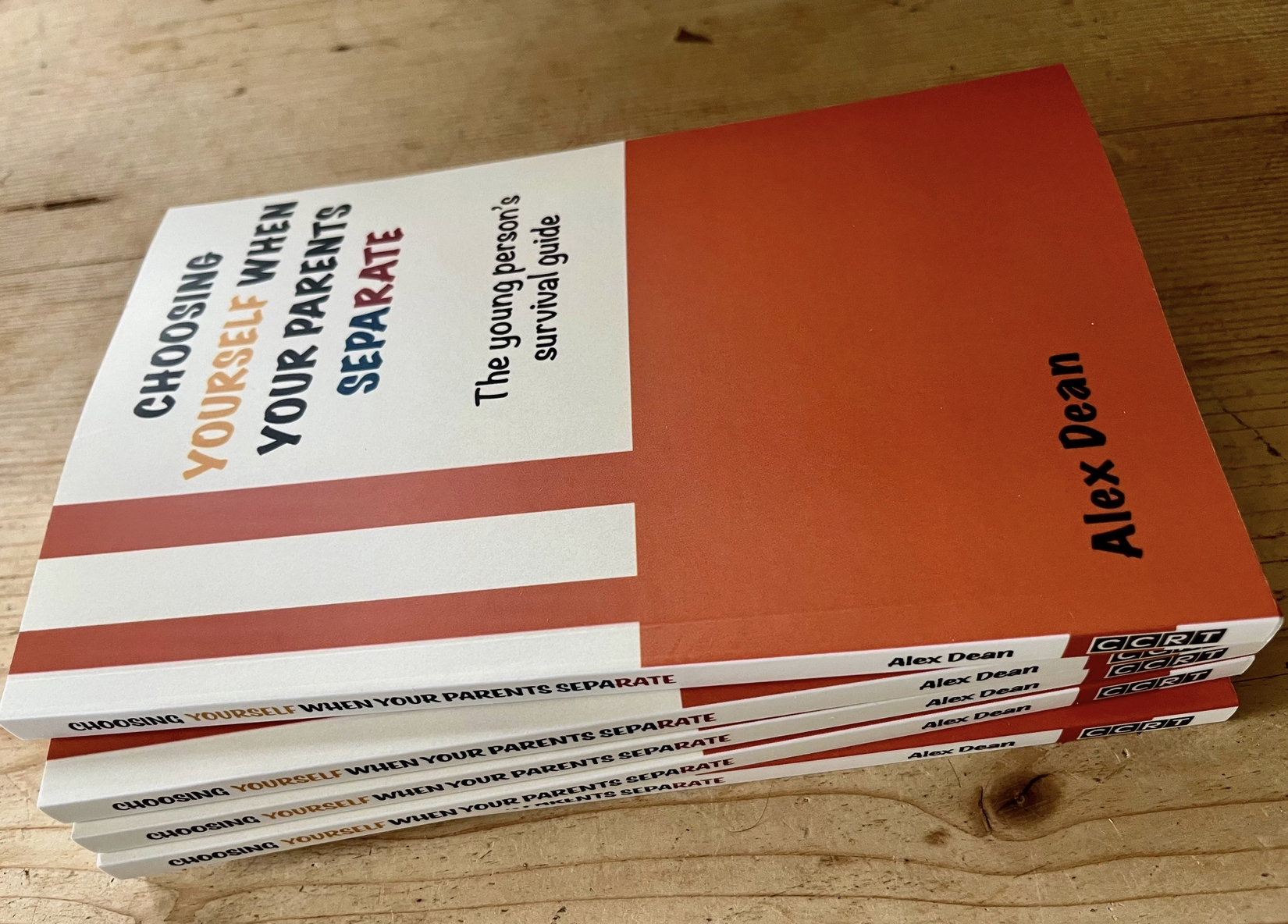
The event will also launch the book ‘Choosing Yourself When Your Parents Separate’ – The Young Person’s Survival Guide which has been written by a young person removed from the care of an abusive parent by the Family Court in England and Wales.
You can purchase a ticket to watch the Symposium online HERE
The handbook will be on sale from 13.9.2024 and you will be able to purchase a copy HERE

 Karen Woodall