

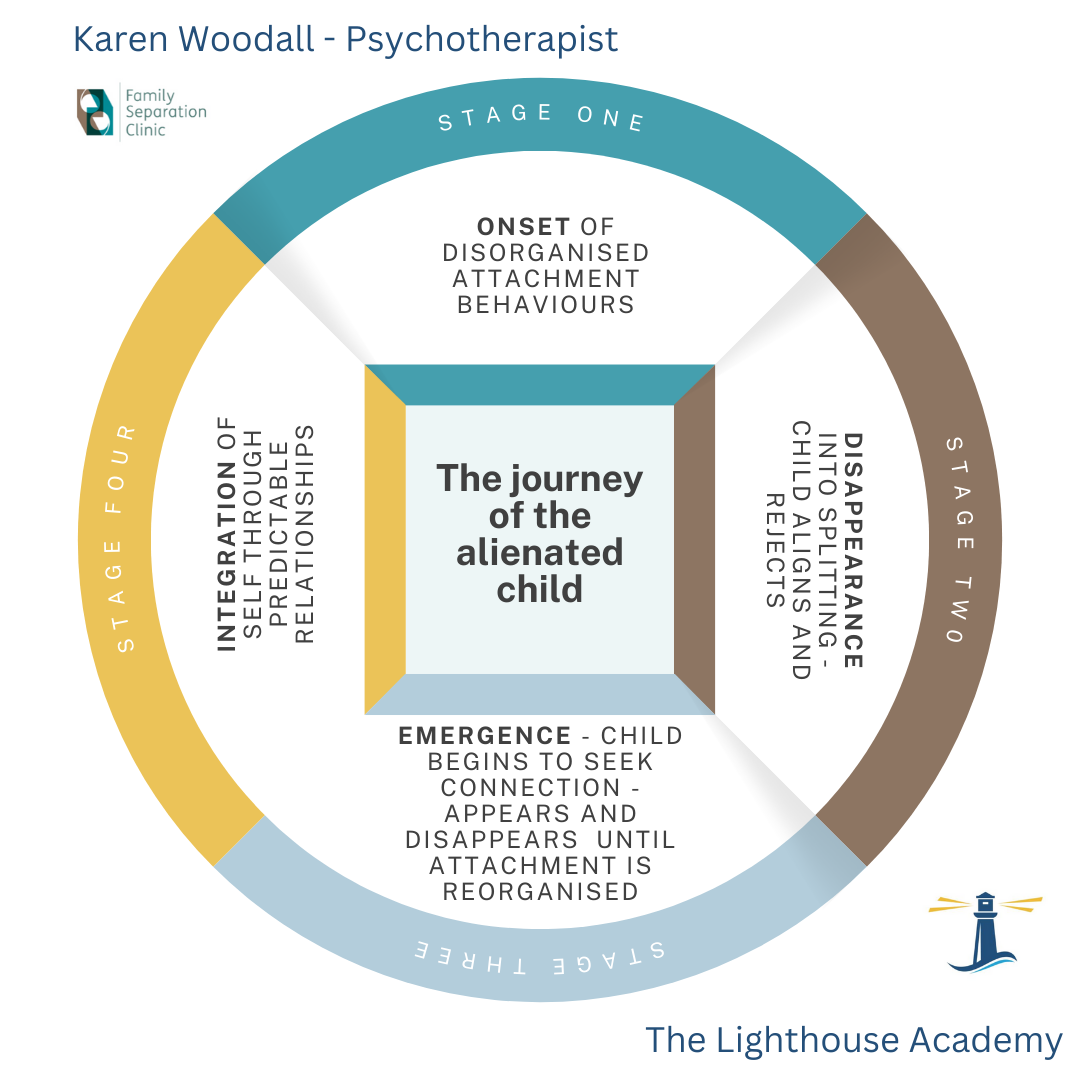
Last week I signed the contract for Routledge to publish The Journey of the Alienated Child worldwide. This book is the first in a series which introduces a new way of thinking and working with the attachment trauma which is caused when children are triangulated into adult feelings about divorce and separation and when children are exposed to controlling and enmeshing parents who put their own needs before theirs.
The Journey of the Alienated Child is a handbook for parents and the professionals who work with them, it aims to demystify the developmental diversion the child who is being harmed at home, is forced to take in order to survive abuse. The book is the result of my fifteen years of work with children who were removed from serious harm by the family courts and placed with kinship carers. It is written from my perspective as someone who has seen the very worst of what parents can do to their children behind closed doors and it contains all of my knowledge and skill about how to position safe kinship care as the treatment route to integration that these children desperately need.
Currently the family courts in the UK and, I suspect, around the world, are captured by an ideological mindset which is based upon the binary splitting belief that mothers are protective and fathers are abusive. This, somewhat polarised approach, which is always created by campaigners who pressure governments with distorted narratives, has caused the reality of alienation of children to be either dismissed or denied. As public judgments show however, even whilst campaigners are still busy trying to force their own binary views into the judicial system, alienation of children, which is caused by hidden harm at home, remains seen by Judges. And the actions of some campaigners to distort reality in live cases, are recognised, meaning that this human pattern of behaviour in divorce and separation, is not going to be pushed back into the shadows.
The Journey of the Alienated Child is a handbook for parents which is based upon the neuroscience of attachment trauma, it describes the stages of maladaptive responses the child shows in their behaviours and the way in which parents in the rejected position can respond to these, to help the child find safety in a world which has become terrifyingly unpredictable for them. Each stage of the journey is identified using the contemporary attachment and trauma literature and the neuroscientific evidence which supports it. Therapeutic parenting responses, which are adjusted for this group of children, provide a framework for adapting your own parenting to attune to your child’s needs.
I wrote this book because of my experience in working alongside healthy parents in the rejected position and my awareness of this attachment trauma being part of the spectrum of psychological coercion and control. I wrote it because I work with as many mothers as fathers who are in the rejected position and because I know that sociological constructs and labels do not provide the tools that parents need to help their children to heal.
Routledge is a serious publishing platform for the dissemination of the work of the Family Separation Clinic and I am delighted that they have accepted this book for publication this year. Their recognition of this family attachment trauma is significant and their support of this handbook is the start of this new route to understanding, treating and healing the family attachment trauma which has caused far too many children to divert from their own healthy development to attend to parental needs.
The Journey of the Alienated Child will be published this year by Routledge, it is in the final edit and a publication date will be forthcoming soon.


