
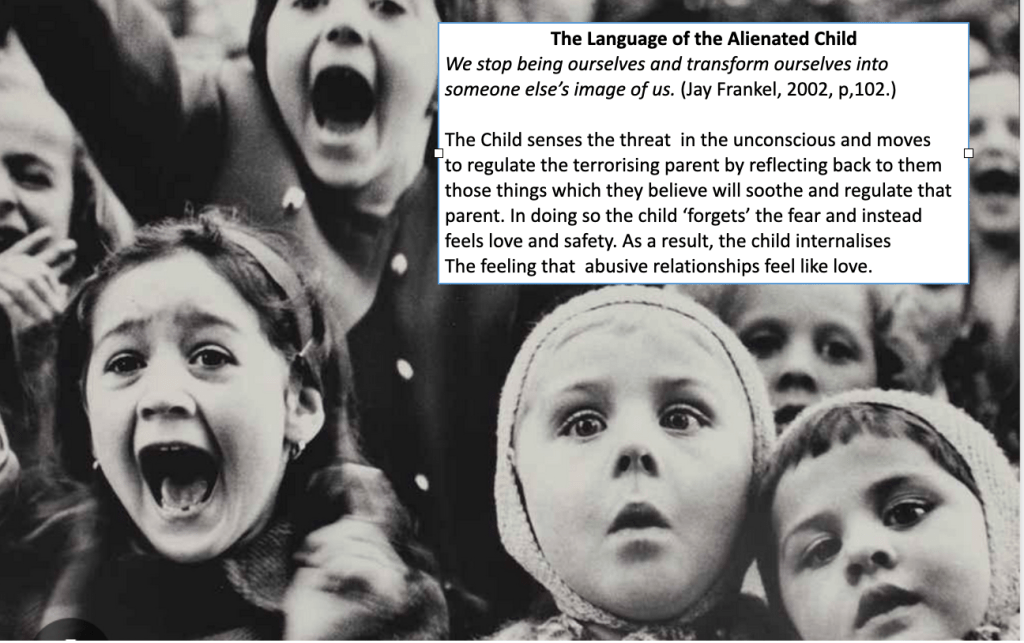
There is a growing and deeply concerning trend within parts of the UK family justice landscape, which positions itself as progressive, protective, and ethically sound, and yet which, when examined through the lens of clinical practice and child development, risks doing precisely the opposite of what it intends. In the effort to reject what is seen as the overreach or misuse of the construct of parental alienation and its theory, something troubling is emerging, specifically, the systematic dismissal of children’s lived experience of harm.
In recent months, I have seen claims made in academic and professional contexts which bear little resemblance to the findings of the courts in the very cases being cited. This is not simply a matter of disagreement, but a reflection of the way in which ideology can reshape evidence to fit a pre-determined narrative. When this happens, it is not only professionals who are misled or the scholarly record which is distorted, children’s lived experience is rewritten in ways that obscure, rather than illuminate, their experience.
At the centre of this shift in the UK sits guidance, aligned with submissions made by the Association of Clinical Psychologists, which states that “the behaviour of the child is not evidence of the behaviour of the adult. A parent alleging alienation must provide direct evidence of the adult’s manipulative acts.”
At one level we might say that this is correct because in all situations, children’s behaviour should not be used simplistically or deterministically as proof of adult wrongdoing. Correlation is not causation, and the history of family court work reminds us that over-interpretation can and does occur. The difficulty arises however, when this principle is extended beyond its proper limits and becomes, in effect, a prohibition on clinical reasoning, which is what has happened in the UK, where parental rights based arguments about domestic abuse, has, for now, once again eclipsed clinical understanding of how children behave when they are being abused.
It is not the case that children’s behaviour cannot never be used to determine what adults are doing to them. In criminal law, that is exactly what happens when parents are prosecuted for child abuse. The Crown Prosecution Service in England and Wales, uses the term ‘Frozen Watchfulness’ to describe children who are suffering from hidden harm at home – this is what the CPS says about this type of harm –
Evidence of emotional and behavioural consequences of child abuse is frequently presented in the following way:- impaired capacity to enjoy life – abused children often appear sad, preoccupied and listless;
- psychiatric or psychosomatic stress symptoms, for example, bed-wetting, tantrums, bizarre behaviour, eating problems etc;
- low self-esteem – children who have been abused often think they must be worthless to deserve such treatment;
- school learning problems, such as lack of concentration;
- withdrawal – many abused children withdraw from relationships with other children and become isolated and depressed;
- opposition/defiance – a generally negative, uncooperative attitude;
- hyper-vigilance – typified in the “frozen watchfulness” expression;
compulsivity – abused children sometimes compulsively carry out certain activities or rituals; and - pseudo-mature behaviour – a false appearance of independence or being excessively “good” all the time or offering indiscriminate affection to any adult who takes an interest.
Each and every one of those behaviours can be attributed to children who are said to be alienated and in my experience of working in the High Court of England and Wales at least, it is the case that behind closed doors, children who behave in these ways are being subjected to hidden harm at home. Not by the parent the child is rejecting but by the parent the child is aligned to. In this respect, a much better way of conceptualising what is happening to children who present in this way is ‘coerced alignment.’
Coerced Alignment
Coercive and controlling dynamics in families do not typically present as overt, documentable acts. They operate through tone, implication, repetition, withdrawal of approval, and the subtle shaping of meaning over time. As Evan Stark (2007) has demonstrated in his work on coercive control, the most powerful forms of influence are often those which leave little trace, precisely because they are embedded in everyday relational exchanges.
Children living within such dynamics do not produce affidavits. They produce adaptations. And it is those adaptations, their behaviours, their language, their relational positioning, which provide the clinician with the most reliable window into their internal world. From Bowlby’s formulation of attachment as a biologically organised system designed to maintain proximity under threat (Bowlby, 1969/1982), through Ainsworth’s observational work (Ainsworth et al., 1978), to Fonagy’s description of the collapse of mentalisation under attachment stress (Fonagy et al., 2002), the field has consistently held that behaviour is the primary medium through which children communicate distress.
Janina Fisher (2017) reminds us that trauma reorganises the personality around survival, not truth-telling. Ellert Nijenhuis and others have similarly demonstrated that defensive systems prioritise safety over coherence. In such conditions, what a child says and does cannot be taken at face value without careful, developmentally informed interpretation.
To insist, therefore, that behaviour cannot be used as evidence of harm is to misunderstand the nature of both development and trauma. Because if the behaviour of the child cannot be used, in any meaningful way, to inform our understanding of the relational environment in which they are developing, then we are left with an impossible task. The very material upon which clinical assessment depends is removed from consideration, and we are asked instead to rely upon “direct evidence” of manipulation, evidence which, by its very nature, is rarely visible, often covert, frequently inaccessible and happening behind closed doors. Children hide the abuse they are suffering at the hands of parents they are afraid will abandon them, it is a fact which has been established for decades in the literature on child abuse and yet, the very people who should be able to protect children at risk of harm, are now operating on a ‘believe all children’ manifesto.
It is not that behaviour proves adult wrongdoing in any simplistic sense. It is that behaviour is the starting point of inquiry, the signal that invites us to look more closely at the relational field in which the child is embedded. This used to be called establishing the ascertainable wishes and feelings of the child in the context which they occur, a safeguarding approach which ensured that adults take responsibility for difficult decisions when children are bonded to abusive parents. What is perhaps most concerning is that, in the current climate, this necessary distinction is being lost. The caution against over-interpretation has become, in practice, a reluctance to interpret at all. And into that vacuum steps ideology and when it does it has catastrophic impacts upon children’s lives as in the example of this tragic recent case –
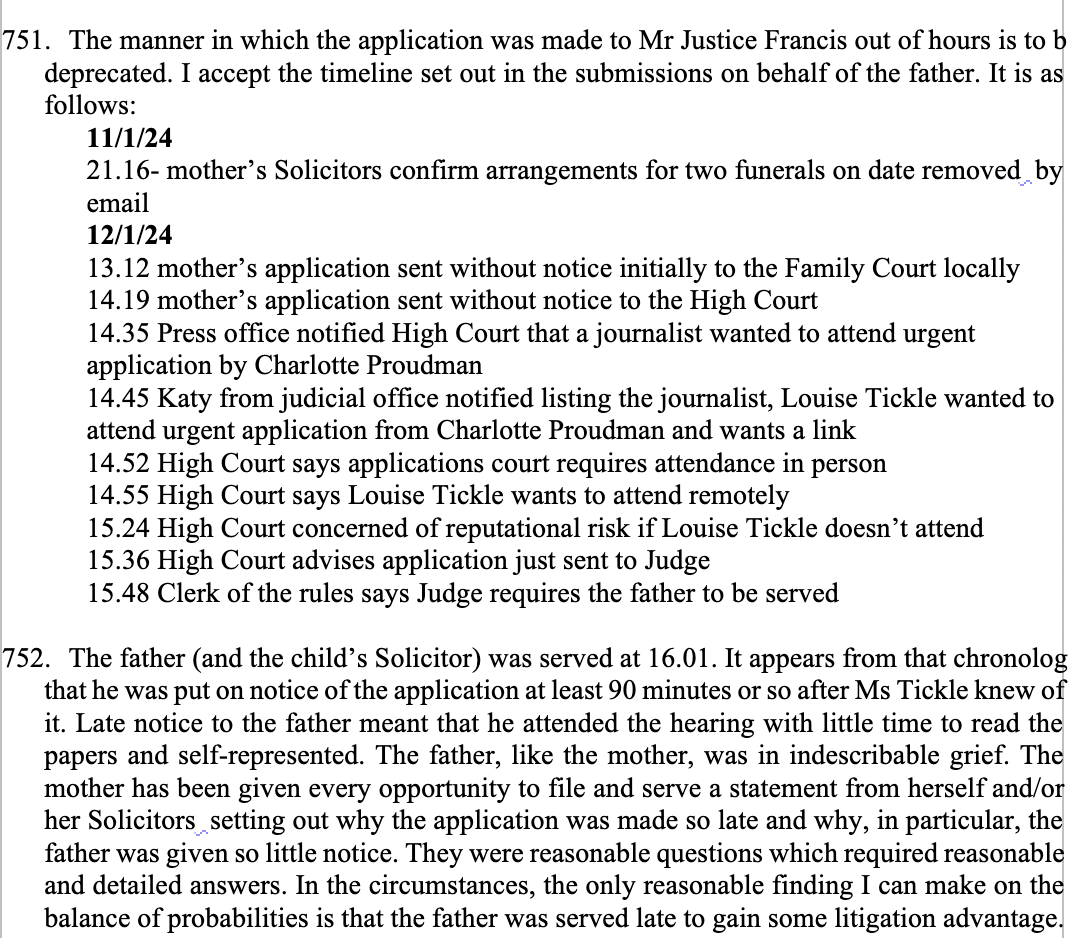
Within this ideological frame, the rejection of a parent is frequently presumed to be justified, the child’s expressed wishes are treated as inherently reliable, and the possibility that a child’s position may be shaped by relational pressure is minimised or dismissed. The complex interplay of dependency, loyalty, fear, and adaptation is reduced to a narrative of autonomous choice with catastrophic outcomes. But children do not operate as autonomous agents in this way and when advocates with a clear personal as well as professional agenda dominate the family justice system, tragic outcomes are highly likely to follow.
As Howell (2011) and van der Kolk (2014) both make clear, children will align with the source of perceived safety, even when that alignment requires a distortion of their own experience. This is not deceit. It is survival.
When we shift our lens from the contested language of “parental alienation” to the clinically grounded process of coerced alignment, we begin to see this more clearly. We move away from labels and towards observable patterns. We recognise that the child’s presentation is not a fixed statement of truth, but a dynamic adaptation to relational conditions. And when we look in this way, the indicators of harm are not hidden. They are present, consistent, and clinically recognisable.
They are evident in the splitting of parental representations into all good and all bad. In the absence of ambivalence, that hallmark of healthy psychological functioning. In the use of developmentally inappropriate, adult-derived language. In the physiological responses of freezing, hypervigilance, and affective constriction described in polyvagal theory (Porges, 2011). In the child’s inability to hold complexity without collapsing into certainty. These are not signs of healthy autonomy at all, they are markers of a mind under pressure and when we understand this we make children safer.
To ignore them is not neutrality, it is a failure of clinical responsibility, which is what happened to Sara Sharif, whose words were followed by social workers and a Judge, neither of whom had the clinical experience to analyse her behaviour in the context of the family dynamics she was living in and neither of whom were capable of knowing what was happening to Sara behind closed doors.
In my work with families in the family court system, the Psychiatrists and Psychologists assessing children and families did not rely upon the label or the theory but used assessment processes which led to accurate recognition that a child was at risk of harm. In requiring “direct evidence” of adult behaviour, we risk overlooking the only evidence that is consistently available to us, the child’s adaptation to their relational world. The family courts, increasingly influenced by this shift, risk becoming arenas in which the absence of visible wrongdoing is mistaken for the absence of harm, and where children’s behavioural signals are stripped of their meaning in favour of more ideologically comfortable interpretations.
The safety of children relies upon clinicians to do what clinicians are trained to do: to observe carefully, to think developmentally, and to interpret behaviour within context, not in isolation and not through the lens of pre-determined belief. To step back from that task is not to act ethically. It is to abandon the child to the very dynamics we are tasked with understanding.
As the family justice system once again shows itself to be open to influence from the campaigners of the day, the very children who should be at the centre of concern are once again the victims of a failure to protect.
References
Ainsworth, M. D. S., Blehar, M. C., Waters, E., & Wall, S. (1978). Patterns of attachment: A psychological study of the strange situation. Lawrence Erlbaum.
Bleiberg, E. (2001). Treating personality disorders in children and adolescents: A relational approach. Guilford Press.
Bowlby, J. (1982). Attachment and loss: Vol. 1. Attachment (2nd ed.). Basic Books. (Original work published 1969)
Fisher, J. (2017). Healing the fragmented selves of trauma survivors: Overcoming internal self-alienation. Routledge.
Fonagy, P., Gergely, G., Jurist, E. L., & Target, M. (2002). Affect regulation, mentalization, and the development of the self. Other Press.
Howell, E. F. (2011). Understanding and treating dissociative identity disorder: A relational approach. Routledge.
Porges, S. W. (2011). The polyvagal theory: Neurophysiological foundations of emotions, attachment, communication, and self-regulation. Norton.
Siegel, D. J. (2012). The developing mind: How relationships and the brain interact to shape who we are (2nd ed.). Guilford Press.
van der Kolk, B. A. (2014). The body keeps the score: Brain, mind, and body in the healing of trauma. Viking.
Understanding Coerced Alignment
| Dimension | Ideological Lens | Clinical Lens |
|---|---|---|
| Starting Point | Child’s expressed wishes are treated as objective truth | Child’s behaviour is understood as communication |
| View of the Child | Autonomous decision-maker | Dependent, developing mind shaped by relationships |
| Meaning of Behaviour | Behaviour reflects reality | Behaviour reflects adaptation to relational context |
| Interpretation of Rejection | Rejection is justified and self-determined | Rejection may be a survival response under pressure |
| Use of Evidence | Requires direct, observable proof of adult wrongdoing | Uses behavioural patterns as indicators requiring exploration |
| Understanding of Influence | Minimised or dismissed unless overtly proven | Recognised as often subtle, cumulative, and relational |
| View of Ambivalence | Lack of ambivalence not considered significant | Absence of ambivalence seen as a key clinical marker of harm |
| Language Used by Child | Taken at face value | Examined for developmental fit and narrative influence |
| Role of the Clinician | Avoids interpretation to prevent error | Interprets carefully within developmental and relational frameworks |
| Approach to Uncertainty | Resolves uncertainty by accepting the child’s account | Holds multiple hypotheses and remains curious |
| Visibility of Harm | Harm often minimised or unseen | Harm becomes visible through patterns of adaptation |
| Outcome for the Child | Adaptation is reinforced and may become fixed | Space is created for integration and recovery |
My work is concerned with understanding children’s behaviour within the relational fields in which they develop, drawing on attachment theory, neuroscience, and psychoanalytic thinking. Rather than relying on labels or polarised positions, I am interested in how children adapt under pressure, and how those adaptations can be recognised and responded to in ways that support recovery.
This year, I will be publishing a new book which sets out this framework in full, offering a clinically grounded, child-centred understanding of coerced alignment, relational trauma, and the pathways through which children can be helped to recover. It is written from a position which is beyond polarised debate and focused upon the careful, disciplined practice of seeing children as they really are when they are coerced into alignment with abusive parents, not as campaigners would like us to believe them to be.

 Karen Woodall - Psychotherapist, Writer, Supervisor, Trainer