

The concept of alienation of children is hotly contested all over the world with the attention of anyone who engages with the subject being forced in one direction or the other by the claims and counter claims made by parental rights activists.
Parental Alienation Theory is considered by some to be a tool used by abusive fathers and by others to be the definitive approach to understanding the issue whilst Resist/Refuse Dynamics which is also called Rejection, Resistance, Refusal (RRR) by the UK legal system, are all focused upon constructs which are focused upon explaining the child’s rejecting behaviour rather than the real issue, which is the child’s alignment. In this respect, children who are being coerced into alignment by a parent after family separation, continue to be failed, by the services that should support them and by the continued arguments over labels, none of which offer the support that children need to identify the harm they are suffering and the protection from that.
Let’s widen the lens and look at what the child’s unwavering and often vocal loyalty does for the parent to whom the child is aligned. When a child claims powerful love and alignment, the parent who is the recipient of that love is protected from scrutiny. Who thinks to look behind the closed door of the home where the child claims ultimate happiness? Instead, when a child aligns, the parent who is the recipient of that loyalty, can stand in the shadows, unexamined, unchallenged and often unconcerned about the fact that the child has rejected half of their heritage – although there may be a good deal of performative behaviour which is designed to convince the onlooker of how that parent would support the child ‘if only the parent in the rejected position would change their behaviour.’
When a child aligns and professes only idealised love and affection for a parent, instead of being alerted to what it means when a child shows a split in their attachment relationships, the eye is always drawn first to the parent in the rejected position – often helped along by supporters of abusive parents who claim that the only reason children reject parents is because of something a parent has done. If we follow that logic however, children like Sara Sharif, who said she was afraid of her mother and wanted to live with her father, the man who ultimately killed her after a long period of subjecting her to serious abuse, must all be considered to be rejecting because of something a parent has done. Which is a dangerous road for anyone to take because it fails, spectacularly, to understand how children behave when they are being coerced by abusive parents.
Children who are being harmed behind closed doors do not have the capacity to say ‘I am being abused’ even in situations where they are, as Sara was, under the protection of social services. In fact children who are being abused will often do exactly the opposite of telling someone what is really happening to them and will, instead, act out the narrative that an abusive parent demands of them, professing idealisation and love for that parent which is accompanied by demonisation and fear of the other. This means that if we use tools which are based upon constructs which assume that the child’s behaviour is caused by conflict, contact or complex divorce, we will miss the reality of what is happening to the child, who is being forced to adapt their behaviours in circumstances where they feel extremely unsafe.
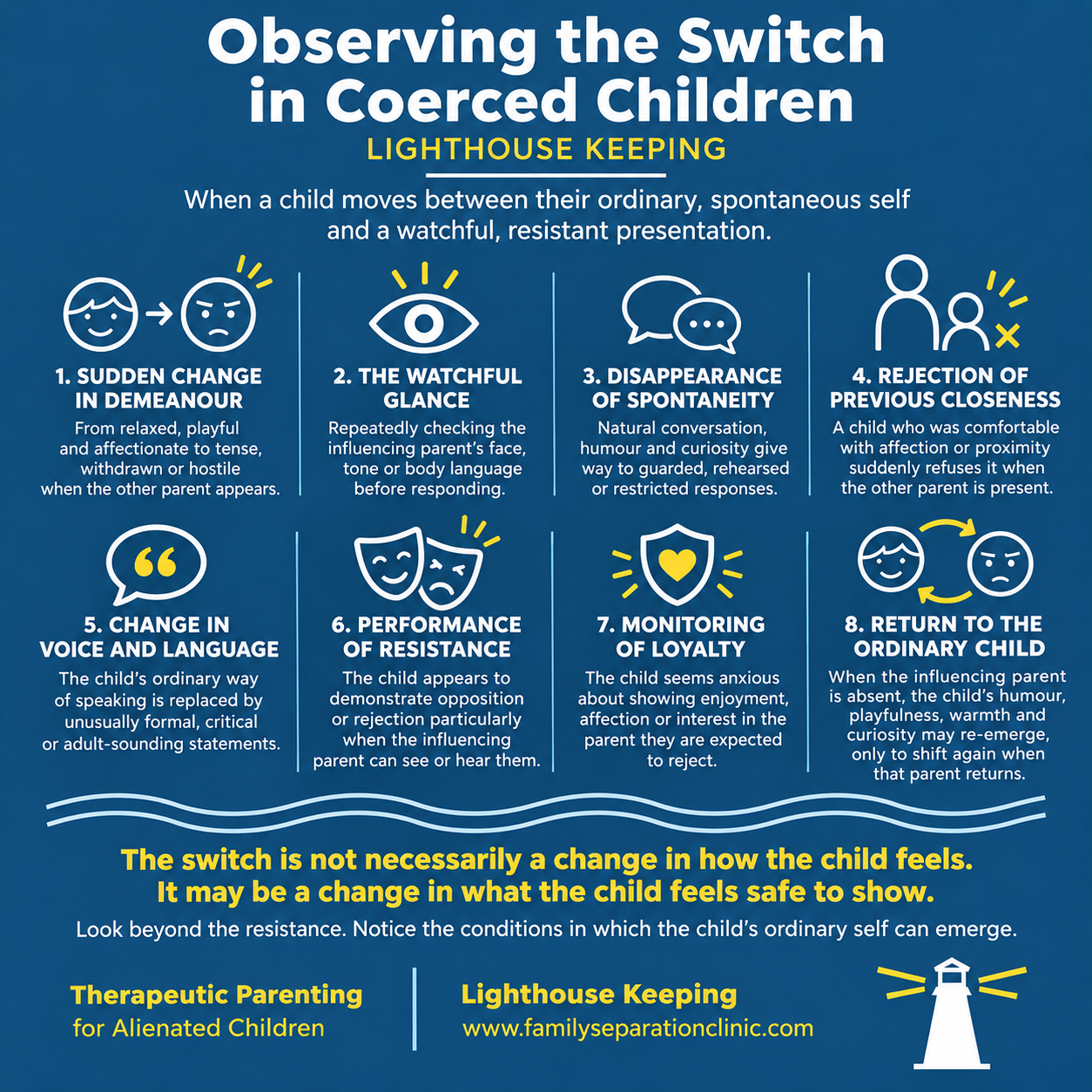
In the UK, the Crown Prosecution Service uses the term ‘frozen watchfulness’ to describe the behaviour of children who are suffering from non sexual abuse. This term describes the shift in children’s behaviours when a parent who is abusing them is in close proximity and it is exactly this which we must observe when we are working with children who align and reject. This behaviour, which is demonstrated by switches in the child’s responses to parents, is sometimes subtle but it can also be extremely obvious if you understand how abused children behave. Many children said to be alienated will fawn over the parent they are seen to be aligned to for example, a trauma based response in which their own sense of self collapses as they seek safety in the alignment with someone who is frightening or unpredictable.
Hyper vigilance or frozen watchfulness is what was seen in all of the behaviours of children I have worked with, from the very first child – Josh – who is now a social worker to the children I work with now who are often adults but still in state of hyper vigilance. Understanding how such children switch their behaviours from relaxed to defensive, begins with recognising that in attachment terms there is no such thing as justified rejection because children who are being abused will often adapt their attachment behaviours as well as blame themselves first. In the UK, where the idea of justified rejection is championed by organisations with ties to ideological campaigners, the risk to children of being coerced by abusive parents into rejecting a parent remains high. Meaning that we remain a long way from a clear understanding that alignment and rejection in divorce and separation are red flag behaviours which indicate a child is under psychological pressure. It also means that we risk continuing to fail children like Sara Sharif, by abandoning them to a lack of willingness to understand, scrutinise and prevent them from being coerced into protecting the very parents who are causing them serious harm.
Coming Soon – The Journey of the Alienated Child
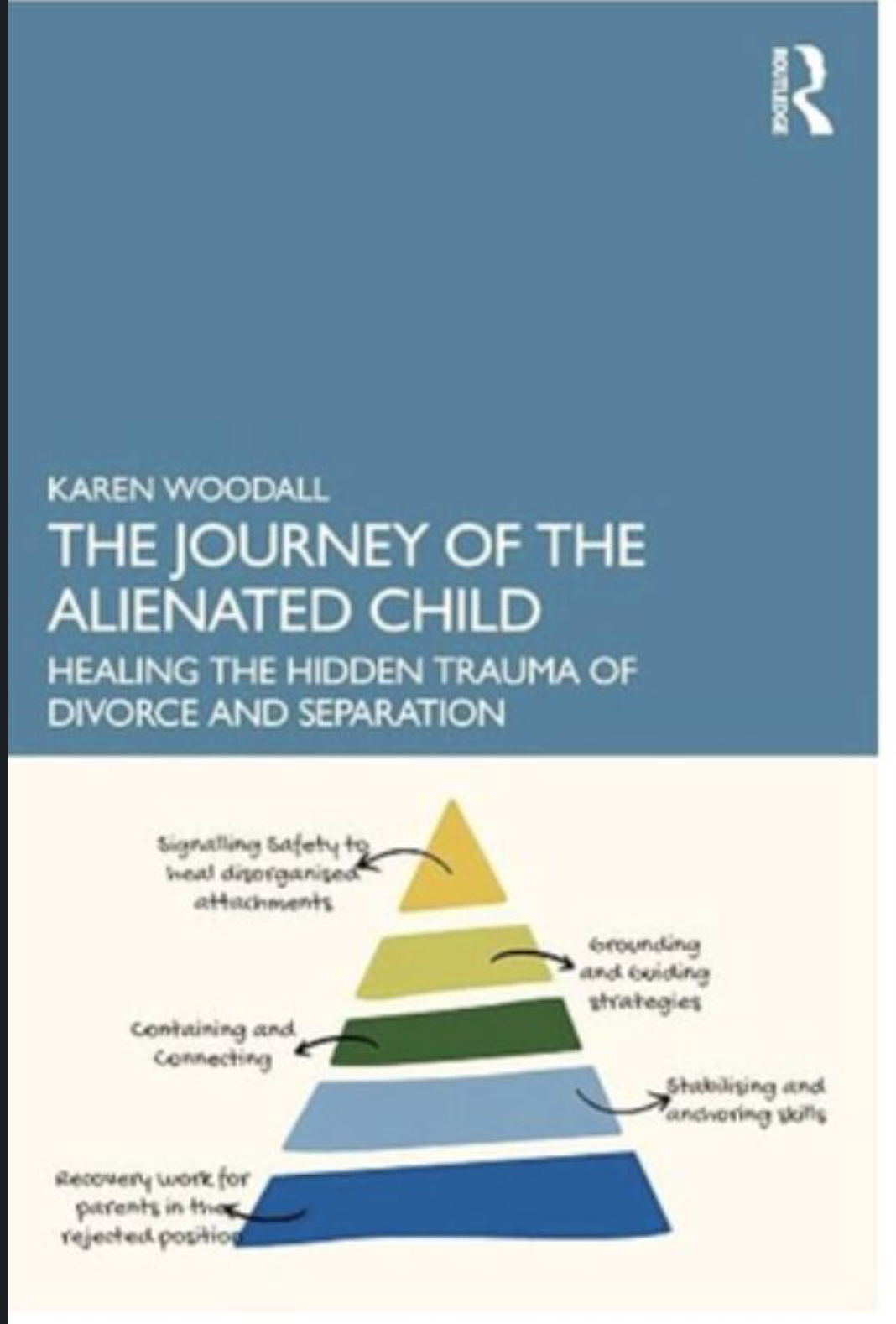
The Journey of the Alienated Child articulates a new framework for understanding the behaviours of the child who aligns and rejects as well as clear strategies for parents in the rejected position to help their children to heal from the attachment harm caused by being coerced by a parent after divorce or separation. Published on December 9th 2026, you can join me for free launch events online.


