

I wrote about the PA vs DA debate in 2020 when campaigners up and down the UK were waging a full on war over labels describing a set of parental behaviours in an effort to get them included in what is now the Domestic Abuse act 2021. I said then and I repeat it now, that the fight between two labels, neither of which are rooted in psychological literature, was something that emotionally and psychologically abused children would pay for dearly. And they have, and they will continue to do so, because having dragged what is actually a hidden and serious form of child abuse in the home, back into the gender war via a fight over labels, the women’s rights lobby have once again gained the upper hand in terms of how the problem is addressed in Court.
PA vs DA
The use of the label ‘parental alienation’ is over the in the UK, where the President of the Family Division has made it clear that the term is not to be used in Court and that the decision about whether or not children who are rejecting a parent are alienated, is to be made by the judge in each case.
It is not the purpose of this judgment to go further into the topic of alienation. Most Family judges have, for some time, regarded the label of ‘parental alienation’, and the suggestion that there may be a diagnosable syndrome of that name, as being unhelpful. What is important, as with domestic abuse, is the particular behaviour that is found to have taken place within the individual family before the court, and the impact that that behaviour may have had on the relationship of a child with either or both of his/her parents. In this regard, the identification of ‘alienating behaviour’ should be the court’s focus, rather than any quest to determine whether the label ‘parental alienation’ can be applied.” Sir Andrew McFarlane’s ruling in Re C (Parental Alienation: instruction of expert) [2023] EWHC 345 (Fam)
In addition, CAFCASS, the body charged with providing assessments to the Court, have recently announced that their officers and Guardians will be required to simply report what ‘victims’ of domestic abuse, are saying, leaving the judge to decide upon the facts. Given that CAFCASS appear to have already decided that anyone saying that they are a victim must be treated as a victim until the judge says otherwise, the women’s right lobby has clearly increased its control over the family courts. It is now very clear that the constant campaigns focused upon eradicating what is called a ‘presumption of contact’, means that the push back to a time when a claim of DA was enough to effectively evict a father from the life of his child, is here. In the fight between two labels, DA, as espoused by the women’s lobby groups, has therefore, at least for a time, won. This of course was the intention of the feminist domestic abuse campaigners all along, because when the issue of children’s relationships with parents post separation, is part of a fight between men and women, it is far easier to win than when it is focused on what it really is – which is hidden child abuse in the home.
As I will go on to show however in this post, there are serious issues with the changes occurring in the family courts in the UK, not least the consequences of an ideological rather than psychological understanding of children’s alignment and rejection behaviour, which is already leading to children losing their relationships with their mothers as well as their fathers and which is leaving children suffering from hidden abuse in the home without protection or help.
What is the gender war?
The war between the genders is a binary fight which is rooted in a belief in patriarchy which is a belief in a a system of societal structures and practices that benefit men at the expense of women. Patriarchy is understood as a form of social organization where power, privilege, and authority are disproportionately held by men, while women are subordinated in various spheres of life. Feminists argue that patriarchy is pervasive and impacts politics, culture, family life, and economic systems. As such this belief system is ideological, it is small p political, not psychological and has no place in situations where we are dealing with emotional and psychological harm to children.
Further, traditional frameworks of domestic abuse, adhere to a gendered lens, predominantly focusing on men as aggressors and women as victims. This binary approach can obscure other realities and lead to one-sided interventions that fail to address the full scope of abuse within families. In families where children align with a parent and reject the other after divorce or separation, this is a problematic framework to use to understand dynamics because of the high risks of leaving children in the care of an abusive mother or father.
The Ideological campaign
The ideological position on children’s alignment and rejection behaviour is based upon worldwide campaigns against the use of the label PA which claim that it is a litigation tool used by abusive men to rebut allegations of child sexual abuse. To bolster their campaign, these women say that children reject parents because of something that parent has done and do not appear to discriminate between rejection of mothers or rejection of fathers, each of whom, who they say are always to blame for the child’s rejection. Central to these campaigners belief system, is that children always tell the truth and must therefore be listened to without question, whilst much of the evidence that these campaigners rely upon are the self reports of mothers who have been found in court to have abused their children which are used to make claims which are out of context and not substantiated by evidence. Many of the strategies used by these campaigners are the same behaviours seen in parents who influence their children, the key people involved in this worldwide campaign are academics, or are simply unqualified and none have any psychological or clinical experience of working with families where children align with one parent and reject the other.
The psychological view
Children’s alignment and rejection behaviour after divorce and separation is a signal that there is something wrong in the family system and that the child is struggling with attachment maladaptations. In my clinical experience, these maladaptive behaviours, signal that the child is experiencing self alienation which is a trauma based response to something which is hidden from view.
The evidence of hidden harm at home
As evidence shows, a child’s alignment and rejection behaviour hides the abuse the child is suffering at the hands of the controlling parent, which can, in fact, continue even when the control that the parent has is ameliorated by the intervention of the Court.
“The children made reference to being approached by a ‘strange’ man on their way to school and/or to sporting activities. For the purposes of this judgment I shall refer to him as an ‘unknown male’. They were given tracker devices by the unknown male and given mobile phones to contact the mother and, more occasionally, the maternal grandparents and were given cash to buy mobile telephones to have contact with their mother and maternal grandparents. During these conversations the children were told, inter alia, to run away from the father’s home, told to make false allegations of abuse against and, as time progressed, to make more serious allegations against the father.” A& B Children – Neutral Citation Number: [2023] EWHC 1864 (Fam)
As adult survivor of childhood abuse Josh told the Symposium on Childhood Relational Trauma on 12.9.2024 –
” My mother emotionally and psychologically abused me, to the extent that I one hundred percent believed that I hated my dad, that I didn’t want to see him, that I didn’t want to have anything to do with him, to the extent where I even have false memories, which I know for a fact didn’t happen now” Testimony of Josh, removed from the care of his mother who caused him serious emotional and psychological harm
And as Alex Dean, adult survivor of hidden abuse in the home and author of “Choosing Yourself When Your Parents Separate” says –
“Anytime I had a big feeling that I couldn’t process I would hide away, because I knew that my feelings were not welcome in that house…and because I wasn’t allowed to be close to my dad, I couldn’t speak to him either. He was off limits. Everything that was happening around me I had to deal with on my own. There was no other option. Just total isolation.” (p.11).
The impact of the current swing in the UK to a focus on DA
There is strong evidence now that children will be less protected from harm by the family courts in the UK, because the DA lobby have, for now, gained greater control over the system. This is not only leading to children losing their relationship with a father but also their mother, most of all it is leading to children being left in the split state of mind without assistance to recover an integrated sense of self, something which is central to the problems that all children who experience self alienation face as they grow older. This concerning turn away in the family courts from the reality of what is happening to children who align and reject after divorce and separation, is, I would argue, a direct result of ideological campaigning and rests upon the ideological demands of campaigners which begin with a removal of a ‘presumption of contact’ which means any contact at all because currently contact can mean letterbox contact, which campaigners are also seeking to remove. In addition campaigners demand that –
The voice of the child must be a determining factor in all cases and children should always be listened to and believed without question
and
Domestic abuse must be treated as the cause of a child’s rejection of a parent without question or investigation
Ideological campaigners will celebrate the achievements of any of these demands, but as evidence now shows, the consequences to mothers and their children, may well be just as severe as to fathers and their children when the Courts are forced to follow the demands of ideological campaigners who do not possess psychological knowledge or skill. Overall however, the loss is to children, of the protection and intervention from the family court that they desperately need in circumstances where they are suffering from hidden harm at home.
Case Studies
The evidence of how the Courts are determining cases where children align and reject is found in the UK in published judgments, one of which published recently, shows the distinct shift in direction of travel in terms of the impact of the demands of the women’s rights groups.
The voice of the child must be a determining factor in all cases and children should always be listened to and believed without question
In a case where four children are rejecting their mother, the judge writes to them as follows
“Your Mum and Dad came to court. Your Dad told me that he would not force you to see your Mum and that your views should be respected. Your Mum told me how much she loves you and wants to be in your life. [redacted] suggested that each of you could have an e-mail address and your Mum could write to you once a month and then it is up to you whether you read it and when.
I have finished the court case and I have decided that now is not the right time for
you to see your Mum face to face. I do think that it is best for you if she sends you a message every month to your e-mail addresses and then it is up to you if you want to read it. Your Dad must make sure that you can read those e-mails whenever you want to. I have made an order that places a hurdle in the way of your Mum coming to court again during the next 3 years. I would look at what she says if she comes back to court. If things have changed, I could give her permission to start a new court case. One of the things that might change is if one of you tell her that you would like to see her. If things have not changed, I will not let her start a new court case.“
The judge in this case refused to order an assessment or intervention and went merely upon the wishes and feelings of the children. More than that, she puts the responsibility for the decision about whether their mother can return the case to court on the shoulders of the children. Reading through this judgment, it is apparent that there have been difficulties on both sides but there is clear evidence of behaviours in the children’s father which are seen in situations where children are overwhelmed and enter into defensive splitting as a result of traumatic family dynamics. Instead of attending to those dynamics, this judge simply leaves the children in a state of mind which evidence shows they are incapable of recovering from without help. Just like Josh and Alex, who both said they didn’t want to see their father, these four children say they do not want to see their mother. Sadly, these four children are unlikely now to see their mother ever again because the family court has failed to protect and help them.
The demands of the ideological campaigners are met in this judgment, the children are listened to without question and their wishes and feelings lead the way, I leave it to you, the reader, to determine whether this is in the children’s best interests.
Domestic abuse must be treated as the cause of a child’s rejection of a parent without question or investigation
It would seem that in the release of CAFCASS’s new Domestic Abuse Policy, this demand has already been met with CAFCASS releasing a statement recently which read as follows –
FCAs and Children’s Guardians will no longer use language such as ‘claims’ or ‘alleges’ in reports to court, using instead the words of children and adults who are victims of domestic abuse. It is for the court to determine the facts. CAFCASS announcement of new Domestic Abuse Practice Policy – October 2024
The phrasing of the above statement makes it clear that whilst it is for the court to determine the facts, CAFCASS will, themselves, treat those who say they are victims of domestic abuse as if they are victims until or unless the court decides otherwise.
The impact of the above practice requirement will of course be to remove the capacity of CAFCASS practitioners to analyse the words of mothers and children in the context in which they arise, meaning that, as many judges rely upon CAFCASS reports to guide them in their decision making, what children like Josh and Alex say about the parent they are rejecting, will be heard by the court without question or investigation.
Whether this is the first step back to the time when domestic abuse claims were treated in court as a good enough reason for a child to reject a parent remains to be seen, what this practice policy does immediately however, is incentivise parents to tell their children what to say and how to behave around CAFCASS. Little wonder the ideological campaigners were seen to be celebrating recently, their goals are being met by a system which is influenced by a fight over labels rather than by psychological knowledge.
The problem with labels
PA as a label and theory was always vulnerable to attack by the domestic abuse lobby because it can be so easily positioned as a tool of abusive fathers and therefore easily dragged into the gender war. In many ways DA as it is espoused by women’s rights activists is just as vulnerable to attack for the same reason, meaning that the age old he said/she said dynamic is readily re-created when the issue of children’s alignment and rejection behaviour is conceptualised this way.
Shift away from this binary use of labels and constructed theories back to the established literature on psychoanalysis, attachment and structural therapy and the problem becomes both understandable, treatable and protected from the same attack by ideological campaigners. Primarily, the shift away from the labels and respective theories which underpin them, liberates the court, social workers and clinicians to understand the problem as it really is, a hidden harm at home, which requires further investigation and then intervention which is based upon protecting the child and constraining the harmful behaviours from a parent.
Alienation as a childhood relational trauma
When I first began to work in the family courts, I was instructed to assess families where a parent was found to be implacably hostile, to determine, along with a child and adolescent psychiatrist, what the root cause of that hostility was and how it might be ameliorated. Together with a diagnostic assessment which ruled issues such as personality disorder in or out, we were able to differentiate situations in which children were suffering from hidden harm at home and provide urgent protection where necessary as a result. In doing so we did not use labels such as PA or DA, we used standard psychological and psychiatric tools as part of the initital assessement and psychotherapeutic responses to assist families in a structured treatment plan. As such we were working with a community based model of practice which was common in psychoanalytic practice in the latter part of the last century, an approach which maximised the protection of the child suffering from hidden abuse. This rooting of the issue of children’s alignment and rejection behaviour in divorce and separation in a children’s mental health framework was absolutely correct in my view because it enabled the issue to be understood and worked with outside of ideological constructs such as patriarchy and parental rights, neither of which have a role to play in either understanding or resolving this family attachment trauma.
In conclusion
The debate between the labels PA and DA has, in my experience, cost children in the UK who are at risk of attachment trauma in divorce and separation dearly. Whilst it is too early to say whether the court will resile from its established understanding of this hidden harm in the home, it is clear that campaigners are intent now on pressing home their advantage in terms of changing institutional attitudes to force a shift back to a position where claims of PA will be automatically considered evidence of post separation abuse by fathers. For mothers whose children reject them, the belief amongst these campaigners that children only ever reject a parent because of something that parent has done, will return us to the days when mothers as well as fathers in the rejected position, were villified on the basis of what their trauma bonded children were being forced to say about them. A consequence that none of the, by now well known women’s rights campaigners, appear to show any concern about at all.
In the PA vs DA debate, DA has, for now it seems, tipped the balance of the scales based upon nothing other than the self reports of mothers and the unsubstantiated claims of ideological campaigners without psychological qualification or experience. A somewhat ironic state of affairs given the campaign claims about regulation and qualifications that these women have used throughout the past decade and if it were not so concerning in terms of the risks to children from hidden harm in the home, it could be funny. But, as the testimonies of Josh and Alex show, it is not funny at all, in fact it is downright terrifying because those who stand to lose the most, are those who cannot speak and in the family court process, which is often the only place this hidden harm can be recognised, may (for now), have no-one left to speak for them at all.
News from the Family Separation Clinic
Social Work Training Pathway
Fortunately, the news in terms of awareness of this hidden form of child abuse is not all bad as our social work training pathways continue in the UK and several other countries around the world. Our work with social work partners, enables us to translate our therapeutic model of intervention into a social work programme which supports Local Authorities involved in cases where children are removed from abusive parents. This work is being evaluated to produce an evidence based intervention programme for use by all Local Authorities in the UK.
Research into the lived experience of children removed from abusive parents in residence transfer
Our research project which is evaluating the lived experience of children who were removed from abusive parents in residence transfer by the family courts in England and Wales continues and results will be available in due course. The voices and experiences of children who are now adults, who were removed from a parent due to emotional and psychological harm are an essential strand of evidence which counteracts the ideological claims which are based upon the self reports of mothers, some of whom have been found to have abused their children. Contextualised by evidence, the voices of children who were removed in residence transfer, will offer clarity in terms of the reason for removal and the harms suffered which underpinned it. I will give details of outcomes here as they become available.
The Lighthouse Academy
Our new service for all parents in the rejected position is called the Lighthouse Academy which is the name for our training in therapeutic parenting which we have adapted for all alienated children. The Lighthouse Academy is a place of learning, sharing and growth, where parents and wider family members can find support, understanding, training and resources to help alienated children to recover from the harms they have suffered in divorce and separation. With accredited courses, therapeutic support groups and regular seminars, the Lighthouse Academy provides a safe space for parents and family members to build skills and resilience for coping with this family attachment trauma. More details will be shared here soon as the Lighthouse beam is switched on around the world.
Saturday Seminars
We have two Saturday Seminars left for this year, the first in November and the second, which is free of charge, in December.
Choosing Yourself When Your Parents Separate
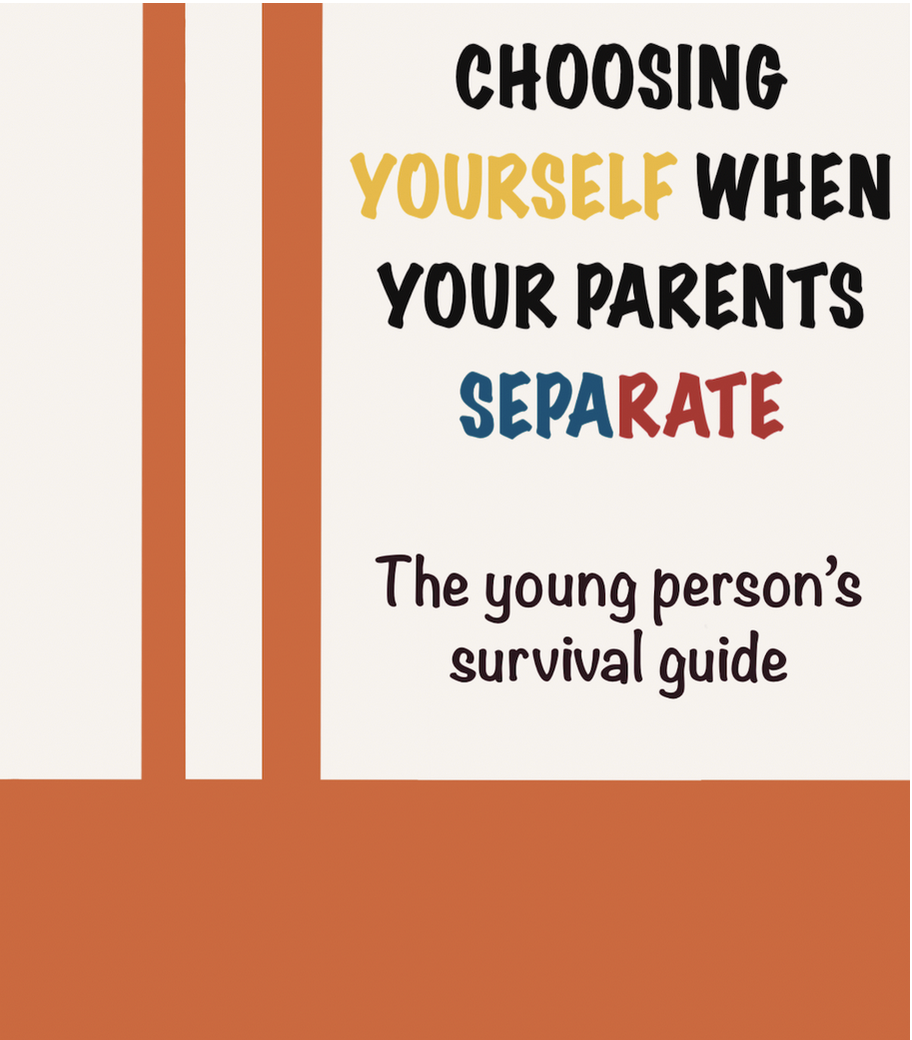
Alex Dean’s book, which gives clear and useful guidance to children and young people on how to cope with unpredictable and frightening parents who influence and control their children in divorce and separation can be purchased here

 Karen Woodall - Psychotherapist, Writer, Supervisor, Trainer