

The Family Separation Clinic in London has been treating the impact of abuse of children in divorce and separation for fifteen years. Working in the family courts with structured interventions as well as outside of the court system, our successful work with families has shown that this attachment trauma can be treated and children can be healed from its long term impacts. In our social work training pathway we teach the principles of child protection to provide a safe structural intervention for children who are aligning with an abusive parent, called Constrain, Protect and Treat, this protocol provides social workers with the steps that are necessary to create safety prior to the child receiving therapeutic support. These steps are as follows –
1. Constrain
- Purpose: To limit the impact of harmful behaviors or influence by one or both parents, particularly in cases where a child is alienated or placed in a loyalty conflict.
- How It Works: “Constraining” means putting firm boundaries in place to prevent damaging actions or narratives from impacting the child. This may involve legally restricting one parent’s influence if they are using manipulation, disparagement, or other forms of psychological pressure to turn the child against the other parent.
- Application: Family courts or therapists may impose structured schedules, supervised visitation, or specific behavioral expectations for parents to follow. The goal is to reduce the child’s exposure to parental conflict or manipulation, helping them form a more balanced and healthier perception of each parent without pressure to align with one side.
2. Protect
- Purpose: To ensure that the child is physically and emotionally safe, and shielded from relational trauma that might arise from being exposed to conflict or hostility between parents.
- How It Works: Protecting the child may involve creating an environment where they are free from harmful discussions, accusations, or loyalty conflicts. This component focuses on reinforcing the child’s right to have a stable, supportive relationship with both parents without feeling the need to choose between them.
- Application: In practical terms, protecting can mean facilitating therapeutic interventions, ensuring the child has access to supportive resources (e.g., counselors, safe spaces for communication), and advocating for parental behavior adjustments that promote emotional security. This step could involve temporarily limiting a child’s contact with a parent whose behavior is deemed harmful while ensuring the child’s primary needs for attachment and stability are met.
3. Treat
- Purpose: To directly address the psychological and emotional harm the child has experienced, working to repair attachment disruptions and build resilience.
- How It Works: Treatment focuses on providing therapeutic support to the child, and potentially to both parents, in order to heal the psychological impacts of alienation and relational trauma. The goal is to help the child develop healthy, secure attachments and reduce any internalized fear or resentment that may have been fostered during the parental conflict.
- Application: Treatment often involves attachment-based or trauma-informed therapy, possibly including family therapy, individual counseling for the child, or specific interventions for parents aimed at fostering positive co-parenting and healthier communication patterns. Therapists work to rebuild trust between the child and both parents, help the child process any conflicted feelings, and support a gradual reintegration of positive relationships where possible.
As well as working with families who are in public law cases, the Family Separation Clinic provides treatment to families outside of the private and public law system. These are often families with children who have aged out of the legal process or families who have not used the family courts at all.
In our work with families outside of the legal process we treat children on the basis of self alienation first, with psycho-education providing the foundation stones for the later work of re-integration of part selves, which is the internal problem seen in alienated children of all ages.
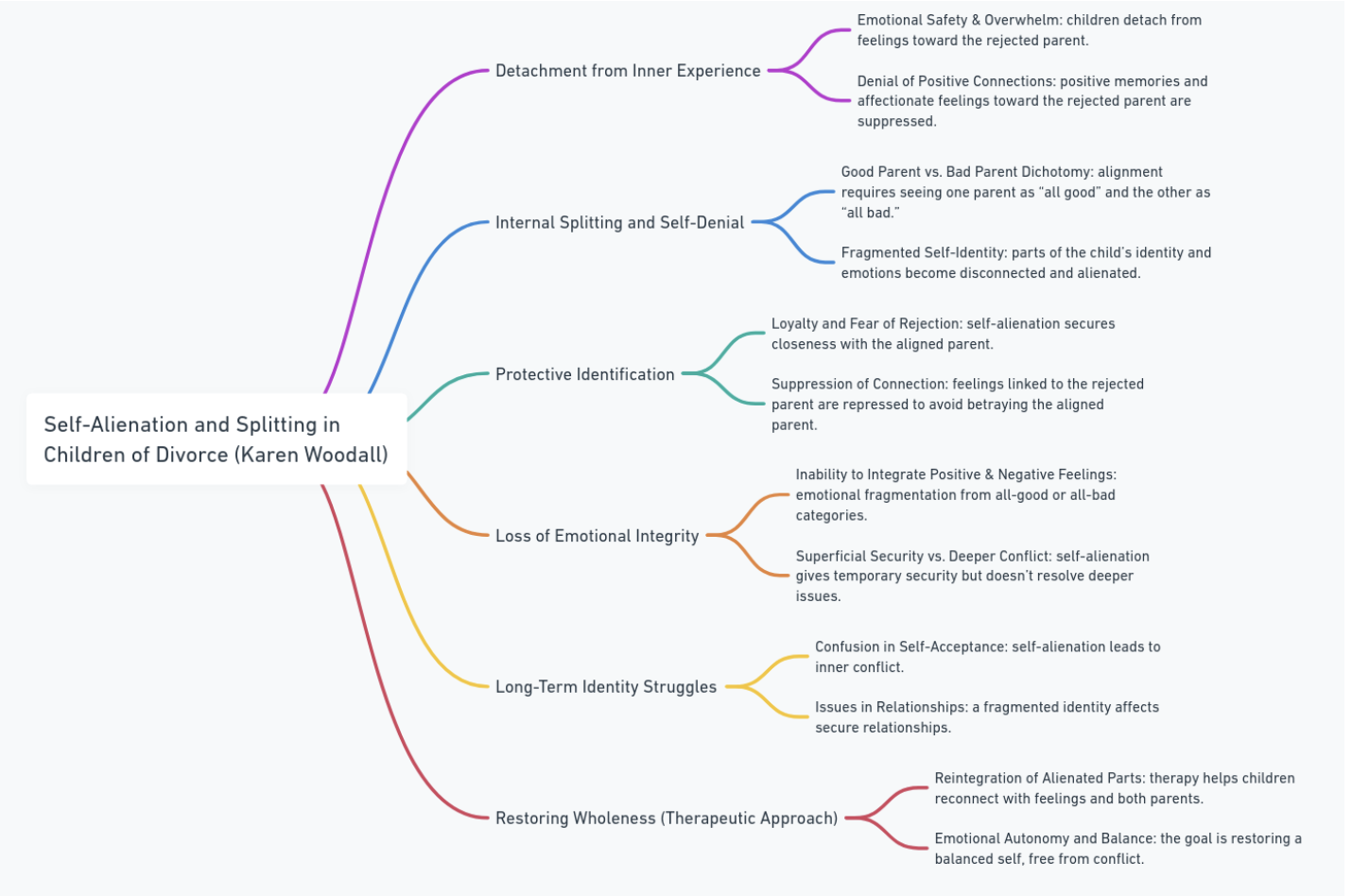
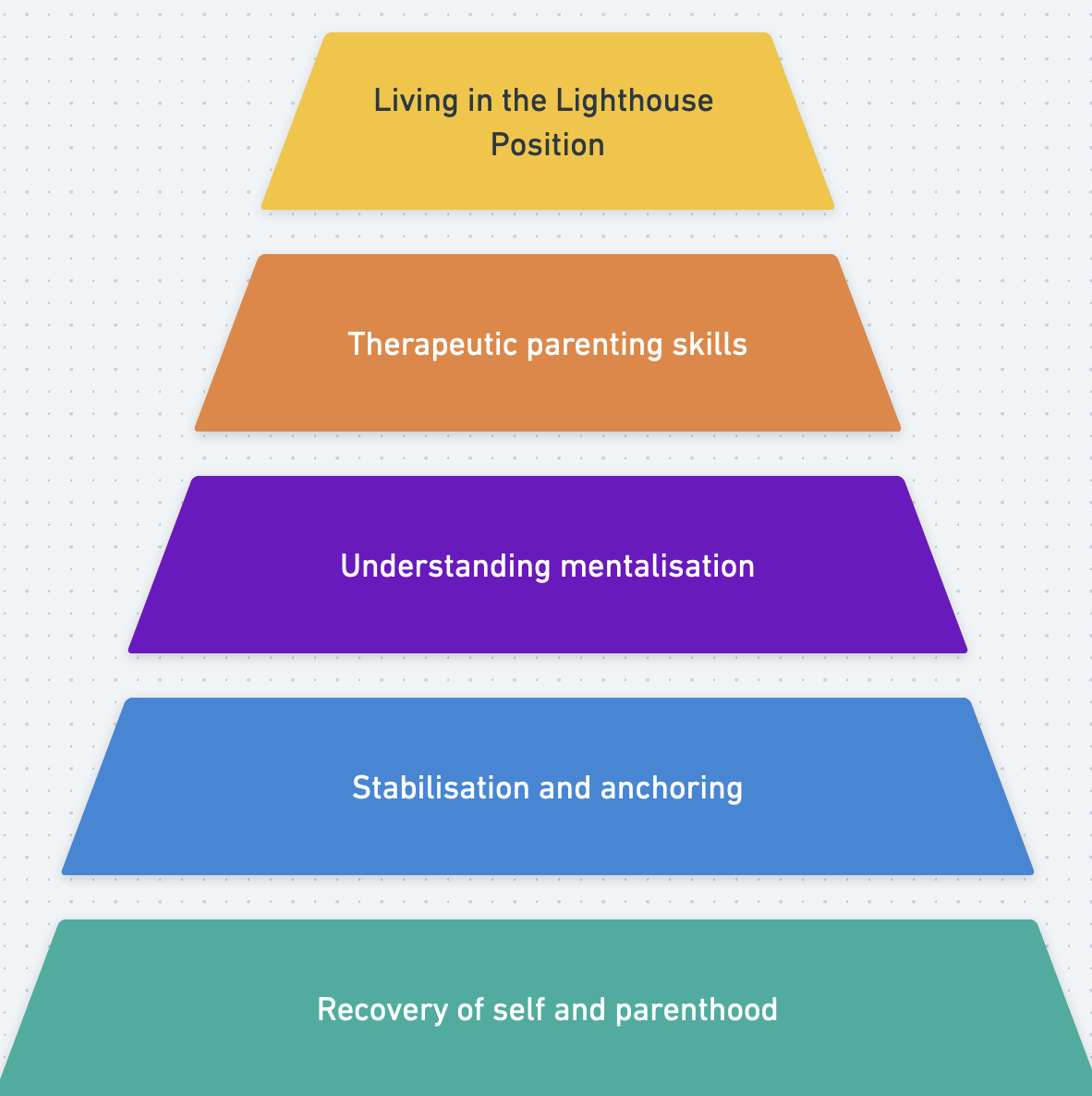
Training parents in the rejected position to use the therapeutic model we have developed to respond to the problem of fragmentation of self in alienated children is the task we have set ourselves in the coming months and years, because we know from successful outcomes reported by parents using this approach, that it is the way to heal attachment trauma in children who have suffered emotional and psychological harm in divorce and separation. The above diagram shows the internal elements we are working with in this model. The following diagram shows the steps we take to train parents to use this approach, which we call Living in the Lighthouse Position.
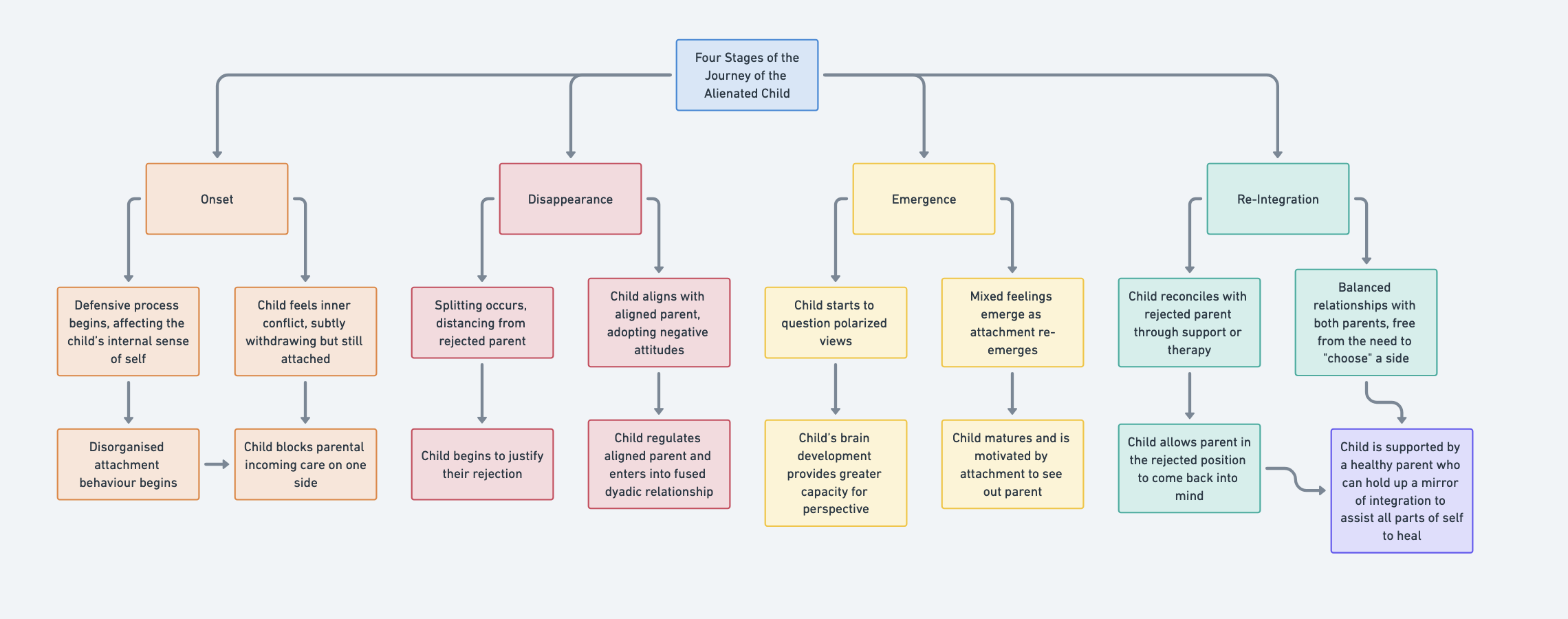
My new book about therapeutic parenting for alienated children is called Holding up a Healthy Mirror, it is accompanied by a workbook for parents and practitioners and will be available in early 2025. A guidebook called ‘The Journey of the Alienated Child’ will shortly be available to help you to understand the stages of alienation that children pass through. The following diagram explains the four stages of the alienation journey which is unpacked in this book.
From early 2025 the Lighthouse Academy, our specialist online service for parents and wider family who wish to use therapeutic parenting skills to assist children with attachment trauma to heal, will be available. Through the Lighthouse Academy we will provide you with all of the learning, resources and accredited skills you need to help your child(ren) to recover from alienation and the harm that it causes. We are working hard on this project now and look forward to welcoming you to join us when we switch on the Lighthouse Beam around the world.
Exploring the Healthy Mirror
November 16 2024
Exploring the healthy mirror
An online event for parents of alienated children and their families with Karen Woodall
Australia, New Zealand and Hong Kong – UK and Europe timezones
This two-hour event will be delivered on Zoom between 09:00 and 11:00 UK Time.
To check your local start time, please click the link below, ensure ‘Date’ is selected, and enter 09:00 – 2024-11-16 – London in the right-hand boxes, here: https://dateful.com/time-zone-converter
Example start times:
- 22:00 Wellington, New Zealand
- 20:00 Sydney, Australia
- 17:00 Perth, Australia
- 17:00 Hong Kong
A Zoom link for this event will be included in your order confirmation (please contact us, immediately, if you do not receive this).
Cost £40.00
USA and Canada – UK and Europe Time Zones
This two-hour event will be delivered on Zoom between 17:00 and 19:00 UK Time.
To check your local start time, please click the link below, ensure ‘Date’ is selected, and enter 17:00 – 2024-11-16 – London in the right-hand boxes, here: https://dateful.com/time-zone-converter
Example start times:
- 18:00 Berlin, Germany
- 19:00 Tel Aviv, Israel
- 12:00 New York, NY
- 11:00 Dallas, TX
- 09:00 Los Angeles, CA
- 12:00 Ottawa, Canada
A Zoom link for this event will be included in your order confirmation (please contact us, immediately, if you do not receive this).
Cost £40.00

 Karen Woodall - Psychotherapist, Writer, Supervisor, Trainer