
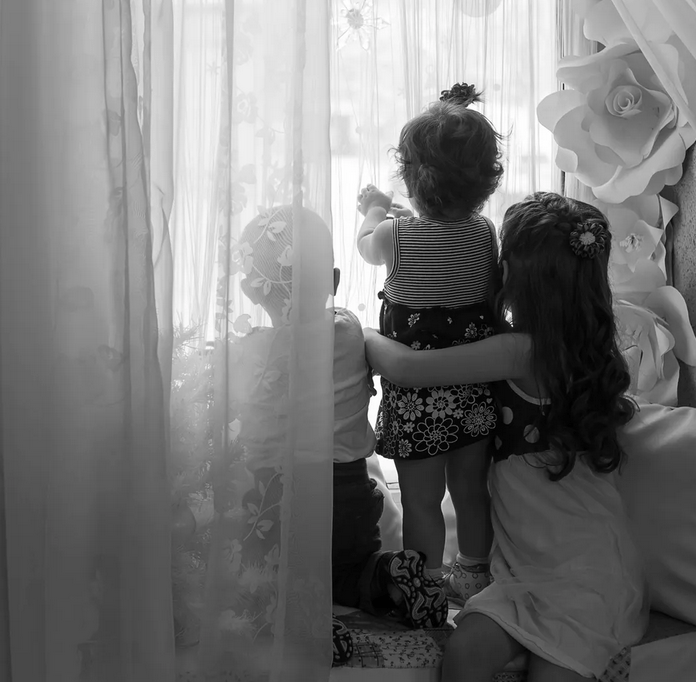
When a child is exposed to one parent’s fear, anger, or hostility toward the other, and there is no safe relational space in which to process that experience, the child’s nervous system is driven into a state of fright without solution. In this state of mind, the brainstem detects danger, the limbic system amplifies it, and the developing mind searches for a way to restore safety. But in a dependent relationship, there is no possibility of escape. The only available strategy is adaptation, which is what we see happening to too many children of divorce and separation, especially those who end up in the family court system.
In this scenario, the child learns, often rapidly and without conscious awareness, that safety lies in aligning with the dominant emotional field. Thoughts, feelings, and perceptions reorganise accordingly and what can be said, what can be felt, and even what can be remembered becomes constrained by the need to remain psychologically safe within the relationship. This is what we call at the family separation clinic, coerced alignment. It is not a belief system freely chosen, but a neurobiological solution to relational threat. It narrows the child’s capacity for reflective thinking, reduces tolerance for ambiguity, and produces a form of certainty that feels absolute because it is rooted in survival. In this state, alternative perspectives are not simply disagreed with, they are experienced as dangerous.
What begins in the relational field of a family can, if unrecognised, extend into the professional systems that surround it and this same cascade of behaviour is seen in the ideology which is driving many family court systems aroun the world which, seen through the lens of neurobiology, can be understood not just as a set of ideas, but the cognitive expression of a system seeking stability through control.
When individuals, or groups, become organised around a single, unquestionable narrative, we are often seeing the same underlying process at work as that which takes hold of children who are coerced into alignment with a parent. Complexity is stripped away and contradictory evidence is dismissed and disregarded. Anyone who challenges this dominant view are not engaged with, but are instead positioned as a threat to the system’s coherence. In this way, ideology functions less as reasoned argument and more as a defence against a lack of control.
In recent years, one such ideological position has taken hold in parts of the professional and legal landscape: the assertion that what is often termed “parental alienation” is solely a weapon used by fathers against mothers. This position has emerged, in part, as a response to legitimate concerns about misuse and gendered injustice. However, when it hardens into certainty, as it has in the UK, it ceases to function as a critical lens and instead becomes an organising ideology. It is at this point, the dynamics of coerced alignment begin to repeat at a systemic level as professionals may find that certain observations cannot be voiced without risk. Questions that complicate the prevailing narrative are avoided. and hypotheses are not tested, not because they lack merit, but because they sit outside what is currently permissible to think. The field becomes constricted, not through explicit prohibition, but through the anticipation of relational or professional consequence. This is exactly what has happened in the family court system in the UK, at least amongst a ring of professionals and the campaigners who support them and when this critical situation is reached, it can have catastrophic consequences for children.
The subtle and pervasive use of fear to regulate behaviour is enacted through threats to reputation, credibility, and professional standing which becomes contingent upon alignment with the dominant view. To step outside of it is to risk criticism, exclusion, or censure. And so, as in the child, compliance becomes the route to safety and silence about the risks of harm to childen follow.
The tragedy in this is that the system begins to mirror the very dynamics that are causing harm within the families where a single narrative dominates. In this situation, alternative perspectives are experienced as dangerous and the capacity to think reflectively is diminished. And the child, once again, is left within a closed field where their experience is interpreted through a lens that may not fully capture the complexity of their situation.
When I first encountered an alienated child it was through the lens of his father’s concern about the harm he was suffering. Josh, who is now about to qualify as a social worker himself, was being routinely harmed by his mother and the only evidence of this was the way in which this harm affected his relationship with his father. You can hear Josh talking about his experience here.
https://www.familyseparationclinic.com/symposium/symposium-outputs/
When I first met Josh’s father he told me that his son was being harmed by his mother, he also told me that other people disregarded his anxieties and that in Court his efforts to raise the alarm were ignored. In my work with Josh’s father, we mapped the behavioural display of Josh through his attendance at school, showing how this coincided with times he was due to see his father. We also asked the school for their view, linking up the evidence of what was happening in the environment around Josh. Eventually Josh was removed from the care of his mother due to the very serious harm he had been suffering. You can read about this case in the book Please let me See my Son, by Thomas Moore. Josh has shared his story with CAFCASS and shown how, when children’s behaviour is ignored or not interpreted correctly, they are left at risk of harm. Like this child, who was killed by his mother despite his father’s desperate pleas for someone to protect his son.
https://www.linkedin.com/embed/feed/update/urn:li:ugcPost:7452250372456316928?collapsed=1
When I first began to work with alienated children I spent a good deal of my time trying to raise awareness of the risks to children of what are highly gendered assumptions which pervade all systems involved with families in the UK and other countries around the world. For this I was called a men’s rights activist and my reputation was consistently attacked, lies were made up about me and threats were sent to try to shut me down. Eventually those who led this campaign, whose connections to public servants, the media, academics and ideological campaigners, were used to try and silence this work, took control of the family court space and since then, a sustained campaign to water down child protection procedures in the family courts has focused on the idea that claims of alienation are not valid.
Not all claims of alienation ARE valid and in my view Parental Alienation Theory is weak and unhelpful in terms of child protection. But the certainty with which the ideological campaigners have shut down enquiry about why children who are being abused behind closed doors, behave as they do, is both alarming and controlling because it coerces anyone who says otherwise to remain silent for fear of personal and professional attack. We must not allow that to happen.
To work effectively with coerced alignment of children in divorce and separation requires the capacity to remain open to multiple possibilities, even under pressure to align with vocal and aggressive campaigners. It requires professionals who can tolerate uncertainty without collapsing into fixed positions, and who are willing to observe carefully, think slowly, and resist the pull of ideological certainty.
This begins, as it does in the family, with presence. A grounded, regulated presence that does not react defensively to challenge, and does not require immediate resolution in order to feel secure. From this position, it becomes possible to reintroduce something that has often been lost: the space to think, observe and then respond. In that space, questions can be asked and different perspectives can be held. In that space, the child’s experience can be explored rather than assumed.
In the end, the task is not to win an argument or to defend a position. It is to ensure that the systems around the child do not become another site of coercion, because when they do, the child is left with nowhere to go. And when the space to think differently to campaigners and people with personal investment in driving an agenda, is lost, so too is the possibility of protecting children.
One of the clearest signs that ideology has taken hold is the way in which evidence is selected, framed, and deployed. In debates around what is commonly termed “parental alienation,” this can be seen in the use of historical material to discredit or defend positions. Certain statements, often taken from earlier writings or public commentary, are extracted and presented as definitive evidence of the moral position of those associated with a particular theory. These excerpts are then used to collapse a complex body of work into a single, condemnatory narrative.What is striking, however, is not simply that this occurs, but that it occurs selectively. Material that supports the prevailing view is amplified, often without context or nuance, while comparable material that might complicate that view is ignored or treated as irrelevant. In this way, the historical record is not examined, but curated. It becomes a tool for reinforcing certainty rather than a resource for understanding complexity. This asymmetry is not accidental. It reflects the underlying dynamics of coerced alignment.
When a system is organised around a single, dominant narrative, information is not processed neutrally. It is filtered through the question:
Does this support what we already believe?
In some areas of professional discourse, historical statements or positions associated with particular theories are extracted and used to discredit the entirety of the work. Complex bodies of thought are reduced to selected excerpts, which are then presented as representative of the whole. Context is lost, nuance disappears, and the field is organised around a simplified moral conclusion. What is notable, however, is that this process is not applied consistently, because comparable historical positions, arising from other traditions or movements, are not treated in the same way. They are understood within their context, recognised as part of a broader intellectual landscape, or simply not used as a basis for dismissing the entire body of work from which they emerged.
This is not a neutral inconsistency. It reflects the operation of ideological alignment. and when a particular narrative becomes dominant, evidence is no longer evaluated on its own terms. Instead, it is filtered according to whether it supports or threatens that narrative. Material that confirms is amplified. Material that complicates is contextualised, minimised, or ignored and over time, this produces a field in which:
- one body of work is judged by its most controversial fragments
- while another is protected by contextual understanding
The result is not critical thinking, but selective scrutiny and selective scrutiny is not simply a methodological weakness. It is a relational process, shaped by the same dynamics we see in coerced alignment, ie: the need to remain within what is safe to think, safe to say, and safe to believe. And when that happens, something important shifts because evidence is not weighed it is selected and questions are not explored they are avoided. Doubt is no longer tolerated, it is silenced and what presents itself as consenses becomes coerced alignment with a dominant narrative.
In the debate about whether children are abused by a parent in divorce and separation and how we can know that this is happening, the very same dynamic has occurred in the family courts as that which we see in coerced children. Professionals anticipate consequence, manage their fear and narrow what they feel they can say or feel. And when professionals begin to organise their thinking in this way, the system itself becomes part of the problem as the closes and complexity is lost and the child remains caught within a framework that cannot fully see them.
At this point, ideology is no longer simply a set of beliefs it has become a mechanism of coercion, which is exactly where we are right now in the family courts around the world, where those with the capacity to listen to fathers like Josh’s dad and Matthew above and those who can see coercion of children who reject their mothers, are silenced, demonised and ignored.
Coerced alignment is currently in charge of the courtroom around the world and children of divorce and separation are more at risk because of that, then ever before.
New from the Family Separation Clinic
Advocating for your Alienated Child
About this series
There comes a point, for many parents, when the effort to explain what is happening to their child begins to feel as if it is going nowhere. This three-part seminar series will guide parents with alienated children in how to act with clarity, credibility and precision inside a complex and often misattuned system.
You may have written carefully, gathered evidence, attended meetings or court hearings, and tried to make clear the reality of your child’s experience, only to find yourself unheard, or worse, misunderstood. In some cases, the more you try to explain, the more your words are used to position you as the problem.
This is not because your concerns are unfounded, nor because your child is not in difficulty. It is because the systems you are interacting with do not respond to distress. They respond to clarity, organisation and the capacity to remain steady under pressure. And when you are living through the loss of your child, maintaining that kind of steadiness is one of the hardest things you will ever be asked to do.
Over many years of working with families in these circumstances, I have come to understand that effective advocacy requires something very specific. It requires the parent to become organised in their own thinking, to understand the system they are navigating, and to learn how to act with precision rather than urgency.
This seminar series is designed to support you to do exactly that.
What this series offers
This is a structured, three-part series of seminars, each lasting two hours, guiding you through a progression from internal organisation to external action. Each seminar will build upon the last, supporting you to develop a way of thinking and acting that is both grounded and effective.
About the seminars
SEMINAR 1: THE REGULATED ADVOCATE
In this seminar, we begin with the most important foundation — your own internal organisation. You will be supported to understand how the impact of what you are living through affects your thinking, your communication and how you are perceived by others. We will explore the dynamics of the relational field you are in, including the projective processes that can so easily draw you into reactive patterns. The focus here is on developing the capacity to remain steady, clear and credible, even when under pressure.
PART 2: SEEING THE SYSTEM CLEARLY
In this second seminar, we turn our attention to the systems you are interacting with. You will learn how professionals interpret what they see, why the behaviour of your child may be misunderstood, and how patterns of coercion and alignment can be obscured within professional narratives. We will focus on how to organise your thinking and your material in a way that allows your child’s experience to be seen more clearly, including how to present evidence in a structured and meaningful way.
PART 3: RIGHT ACTION AT THE RIGHT TIME
The final seminar brings these elements together into the practice of advocacy itself. Here, the focus is on timing, judgement and precision. You will be supported to develop a sense of when to step forward, when to step back, and how to act in ways that are purposeful rather than reactive. This includes how to communicate effectively, how to recognise moments of opportunity, and how to avoid actions that, although understandable, may undermine your position.
Who this series is for
This series is for parents who:
- are currently separated from their child or experiencing rejection
- are involved with professionals or court processes
- want to advocate effectively, without becoming overwhelmed or reactive
- are ready to develop a more structured and grounded approach
What makes this work differently?
This is not a course about fighting harder.
It is about learning how to stand in a difficult and often confusing field, and to do so in a way that keeps your child in mind, even when your child cannot hold you in theirs.
Practical details
- Three seminars
- Two hours each
- Delivered live (with replay)
- Limited places to ensure a contained and thoughtful space
Booking
If you feel ready to approach advocacy in a different way, you are welcome to join this series.
Places are limited and this series will be closed when we reach capacity to ensure that everyone is able to get the focused help they need to build regulated and confident advocacy skills.
Please read our terms and conditions:https://www.familyseparationclinic.com/parenting/group-work-t-and-c-1/
About Karen Woodall
This series is delivered by Karen Woodall and is based on her successful work with alienated children over fifteen years. Drawing upon her psychotherapeutic experience as well as her research and direct work with alienated children in recovery, Karen offers you a unique insight into the world that the alienated child inhabits whilst helping you to understand how to build a path for the child to walk upon to return to you. Beyond that, Karen will assist you to understand the alienated child in recovery and their unique needs for longer term therapeutic parenting which helps them to integrate all of the lost parts of self. The wealth of knowledge and experience of direct work with families to help them to integrate and recover from this serious trauma that Karen offers, makes this series an experiential, warm and effective opportunity to create your own positive outcomes for your alienated child(ren). Karen’s new parenting handbook, The Journey of the Alienated Children, will be published in the Autumn of 2026.
Saturday 11 July 2026
Saturday 18 July 2026
Saturday 25 July 2026
These seminars will be delivered on Zoom between 17:00 and 19:00 UK Time.
We advise you to check your local start time. To do so, please click the link below, ensure ‘Date’ is selected, and enter 17:00 – 2026-07-DD – London in the right-hand boxes, here: https://dateful.com/time-zone-converter *
A Zoom link for this event will be included in your order confirmation (if you do not receive this, please check your spam folder).
Cost £195.00 (including replay access)
T&Cs: Please read our terms and conditions here\

 Karen Woodall