
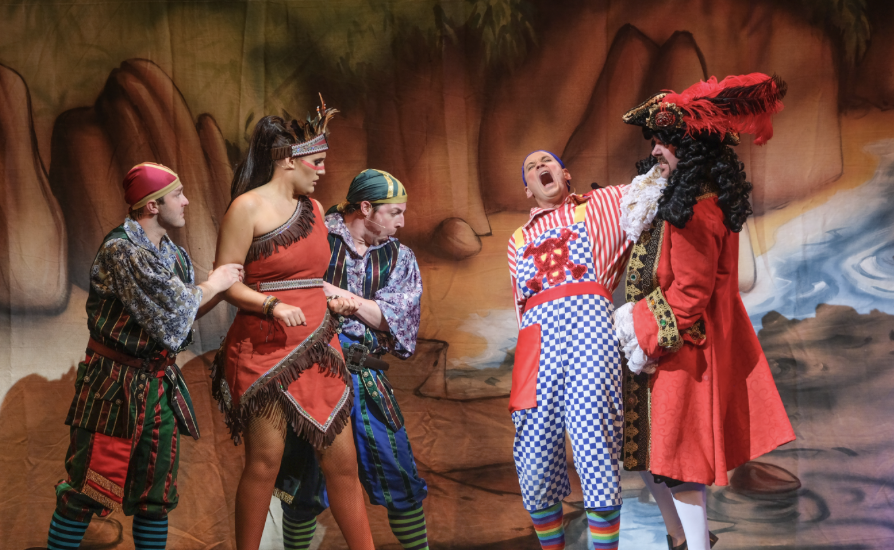
The key symptoms of alienation in children are not simply rejection, anger or refusal of contact. Children may resist a parent for many understandable reasons. The distinctive feature of alienation is the presence of a particular story with psychological significance, the story of a hero and a villain who occupy distinct roles in distinct positions. The hero is in the aligned position whilst the villain is in the rejected position, the child is in the middle.
The parent in the rejected position becomes the villain in this story, the one who is described as entirely bad, dangerous, selfish, dishonest or unworthy of love. Their ordinary mistakes become evidence of malign intent. Their loving actions are dismissed as manipulation. Their history with the child is rewritten, and positive memories are denied, minimised or stripped of emotional meaning.
The hero is the aligned parent. This parent is experienced as entirely good, protective, truthful and indispensable. Their behaviour is rarely questioned. Contradictions are overlooked, and responsibility for family difficulties is located elsewhere. The child may feel compelled to protect, defend or emotionally care for this parent, even while believing that the parent is protecting them.
This hero-villain structure is the psychological signature of splitting.
Object relations theory explains splitting as a defence against unbearable ambivalence. Ordinarily, children gradually learn that the people they love can sometimes disappoint, frustrate or hurt them while remaining loved and fundamentally safe. The “good” and “bad” experiences of a parent become integrated into a whole and complex relationship.
In alienated children, that integration has broken down or has been prevented or pressured. Goodness and badness become divided between two people in this scenario where one parent must contain everything safe, loving and trustworthy; the other must carry everything frightening, hateful and unwanted.
One of the key realities in this scenario is that the hero cannot remain entirely good unless someone else becomes the villain of the piece. The alienation story needs both roles. The villain provides somewhere to deposit the family’s unprocessed anger, fear, shame, grief and blame whilst the hero provides the child with belonging, protection and psychological certainty. Together, these roles transform a confusing family experience into a simple moral drama:
One parent saves me. The other parent harms me.
Projective identification turns this internal division into an interpersonal performance which I call the Projective Pantomime. The parent in the rejected position is not merely thought about as the villain; they are repeatedly placed under pressure to inhabit the role. Exclusion, accusation, provocation and the loss of the child may leave that parent distressed, angry, insistent or desperate. These understandable responses are then used as evidence that the parent really is unstable, controlling or dangerous.
Meanwhile, the aligned parent is confirmed as the hero who protects the child from the reaction that the projective process has helped to produce.
The child becomes both a participant in and the captive audience of this pantomime. Their role is to repeat the story, defend the hero and reject the villain. This does not necessarily mean that the child is consciously lying. The child may have become psychologically dependent upon the story. To question the hero could threaten their security and belonging; to remember loving the villain could generate guilt, fear or a sense of betrayal.
Professionals may also be recruited into the drama. Those who accept the child’s polarised account without exploring its psychological organisation can be cast as rescuers alongside the hero. Those who introduce complexity may be accused of supporting the villain. In this way, the original family splitting can spread into legal, educational and therapeutic systems.
The presence of a HERO and VILLAIN does not, by itself, prove alienation but careful observation will demonstrate the proportionality of their response and their capacity for nuance. A child describing real harm can usually retain some complexity over time whilst an alienated child’s narrative is narrow, rigid, absolute and psychologically closed: the hero can do no wrong, and the villain can do no right.
The central assessment question is therefore not merely:
Why is this child rejecting a parent?
It is:
Why does this child’s psychological safety depend upon one parent being the HERO and the other being the VILLAIN?
Because recovery begins when the child is released from the Projective Pantomime, the time when the hero becomes human again and the villain is allowed to become a parent again.
Beyond the projective pantomime, where parents are just parents and children are free of concerns about who should be adored and who should be despised, is where real life takes place.
Understanding the projective pantomime: How children become recruited into distorted family roles.
With Karen Woodall
Wednesday 22 July 2026
This seminar will be delivered on Zoom between 17:00 and 19:00 UK Time.
To check your local start time, please click the link below, ensure ‘Date’ is selected, and enter 17:00 – 2026-07-22 – London in the right-hand boxes, here: https://dateful.com/time-zone-converter *
A Zoom link for this event will be included in your order confirmation (if you do not receive this, please check your spam folder).
Cost £40.00 (including tax)
T&Cs: Please read our terms and conditions here
* we are unable to offer refunds for missed events.
About this listening and learning circle
One of the most confusing experiences for parents living through attachment disruption is watching a child begin to behave as if they are acting within a script which no longer reflects lived reality.
Children may appear to adopt rigid roles, repeat emotionally charged narratives, reject one parent whilst idealising another, or begin performing versions of family life which feel strangely exaggerated, polarised or disconnected from their earlier experience. Parents often describe the sense that their child has become caught inside a relational drama which the child themselves cannot fully see or understand.
In this Listening Circle, Karen Woodall will explore the concept of the projective pantomime, a way of understanding how children can become recruited into distorted family roles through unconscious relational pressures, attachment fear, splitting and projection.
Together we will think about:
- How children become drawn into emotionally organised family roles
- The impact of anxiety, projection and unresolved trauma upon family relationships
- Why children may begin repeating rigid or distorted narratives
- Splitting, idealisation and rejection within attachment relationships
- The child’s survival self and the pressure to maintain alignment
- Identification with the aggressor and trauma based loyalty conflict
- Why direct challenge or fact correction often intensifies resistance
- Therapeutic parenting responses which reduce pressure and preserve connection
- How parents can maintain emotional steadiness whilst refusing the roles assigned to them
This is not a legal advice session. It is a psychologically informed reflective space designed to help parents think more deeply about the relational dynamics affecting their child and family system.
This Listening Circle offers a professionally facilitated reflective space in which parents can develop greater understanding of the unconscious processes shaping family relationships, whilst remaining emotionally supported and clinically informed..
Please read our terms and conditions here
About Karen Woodall
This series is delivered by Karen Woodall and is based on her successful work with alienated children over fifteen years. Drawing upon her psychotherapeutic experience as well as her research and direct work with alienated children in recovery, Karen offers you a unique insight into the world that the alienated child inhabits whilst helping you to understand how to build a path for the child to walk upon to return to you. Beyond that, Karen will assist you to understand the alienated child in recovery and their unique needs for longer term therapeutic parenting which helps them to integrate all of the lost parts of self. The wealth of knowledge and experience of direct work with families to help them to integrate and recover from this serious trauma that Karen offers, makes this series an experiential, warm and effective opportunity to create your own positive outcomes for your alienated child(ren). Karen’s new parenting handbook, The Journey of the Alienated Children, will be published by Routledge later in 2026.
- Need help? Contact event organizer


